DINNER
Bacon Cheeseburger Cabbage Cups
Baked cabbage cups filled with beef, bacon, and cheddar, brushed with garlic butter and finished with dill pickles and a quick burger sauce.
Published
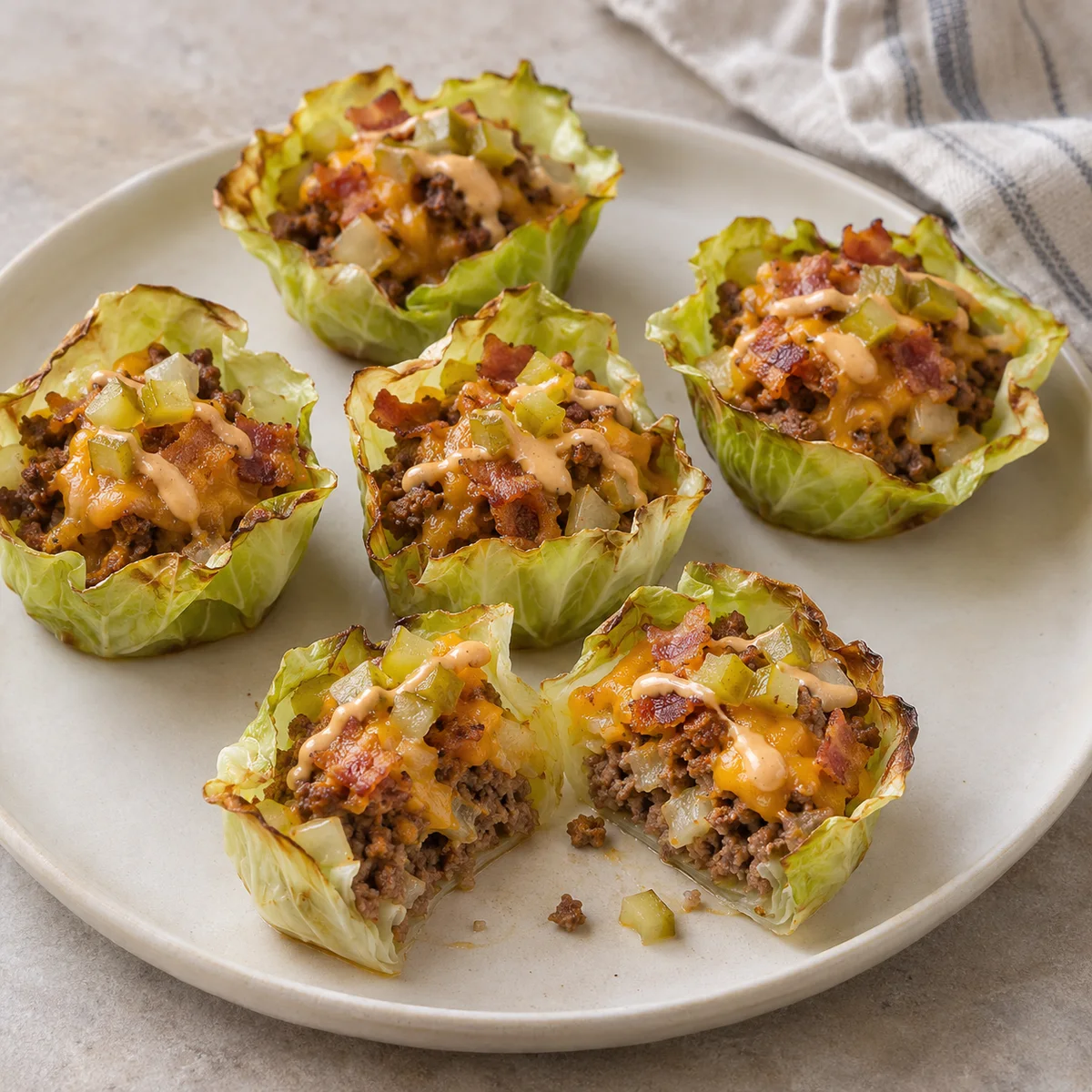
Cheeseburger flavor in baked cabbage cups
Bacon cheeseburger cabbage cups combine browned beef, smoky bacon, melted cheddar, and dill pickles in individual cabbage leaf liners. Garlic butter seasons the exposed edges, while a quick burger sauce adds a tangy finish. Bake them in a standard muffin pan, then serve two cups per person with a salad or roasted potatoes.
The cabbage becomes tender underneath and lightly crisp at its browned tips. It will not have the all-over crunch of a pastry shell. Drying the leaves, draining the beef, and saving the pickles and sauce until after baking give the cups their best chance to hold together without a puddle underneath.
Ingredients and simple swaps
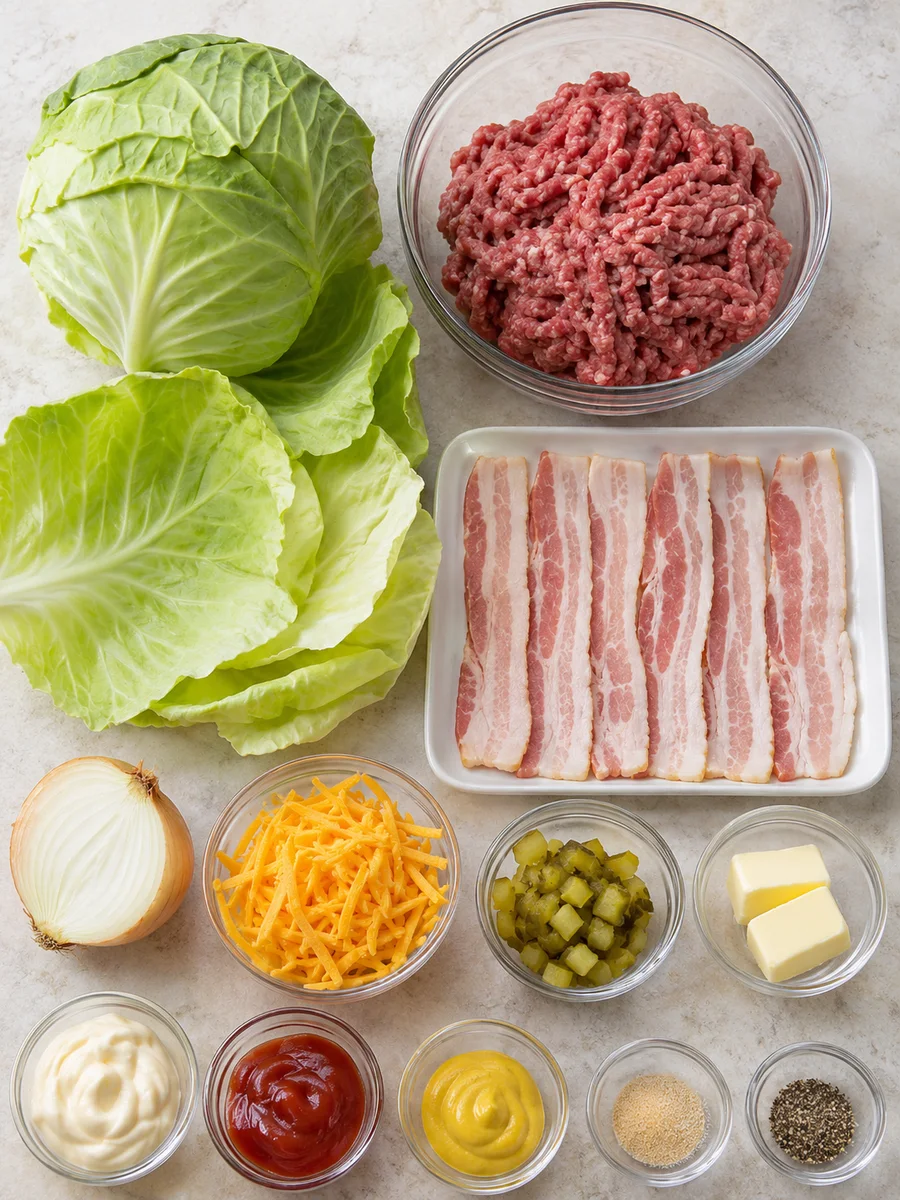
Green cabbage: Choose a large head with broad, flexible outer leaves. You need twelve intact leaves, plus a few spare pieces for patching small tears. Small inner leaves are better saved for another meal. Savoy cabbage is more pliable but can soften faster, so check it early when blanching.
Ground beef and bacon: One pound of 90% lean ground beef supplies the filling for twelve cups. Regular sliced bacon adds plenty of richness; very thick bacon takes longer to cook. Drain both well rather than using their rendered fat as extra filling liquid.
Cheddar and onion: Grate a block of cheddar for even melting. Finely dice the onion so it softens with the beef and fits inside the small cups. Half the cheese binds the hot filling; the rest forms the topping.
Garlic butter and pickles: Garlic powder distributes evenly through melted butter and is less prone to scorching on exposed leaf tips than fresh minced garlic. Drain chopped dill pickles well and add them at the table. Sweet pickles will make the finished dish sweeter.
Burger sauce: Stir mayonnaise, ketchup, yellow mustard, pickle brine, and paprika together. The sauce should be spoonable, not watery. Keep it refrigerated while assembling the cups. Use a labeled egg-free mayonnaise if needed, and check all ingredient labels for individual dietary requirements.
Soften and thoroughly dry the cabbage
Bring a large pot of water to a gentle boil. Separate the broad outer leaves carefully, cutting through their attachment near the core instead of pulling until they tear. If they resist, lower the cored head into simmering water briefly and loosen only the outer leaves as they soften, using tongs. Let them cool before handling.
Blanch detached leaves in small batches for about two to three minutes, just until they bend without cracking. They should still have some structure. Drain, cool under cold water, and pat both sides thoroughly dry with clean towels. Shave the thick raised rib level with the leaf using a small knife; do not cut straight through it.
Lightly oil a standard twelve-well muffin pan. Press one leaf into each well with its broadest part forming the base. Fold excess leaf gently against the sides and trim unusually tall tips so they extend only about an inch above the pan. Patch a small tear with a dry leaf scrap. A large split through the base needs a replacement leaf.
Brown the bacon and beef filling
Cook the bacon in a large skillet over medium heat until crisp, then move it to a paper-towel-lined plate. Pour the rendered fat into a heatproof container, leaving only one teaspoon in the skillet. Do not pour fat down the drain.
Add the finely diced onion and beef. Break the beef into small crumbles and cook until the onion is softened and the beef reaches 160°F (71°C), checking a gathered portion with a food thermometer. Drain excess liquid and fat. Stir in mustard, salt, pepper, and crumbled bacon, then remove from the heat and mix in half the cheddar.
The filling should be moist but not swimming in liquid. Larger beef chunks make the cups harder to portion evenly, so break them down before filling. Use the cooked filling promptly rather than leaving it on the counter while preparing other dishes.
Fill the muffin pan and bake
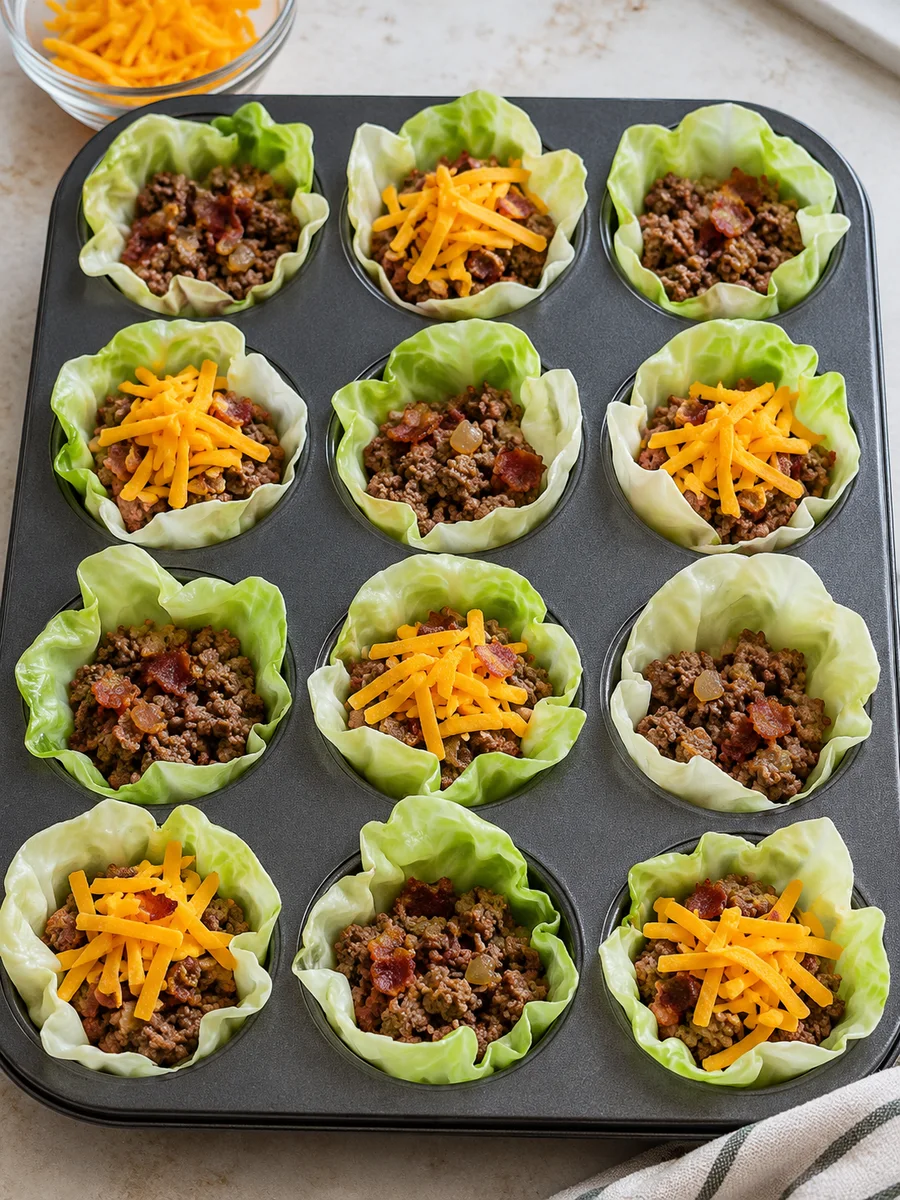
Heat a conventional oven to 400°F (200°C). Divide the hot filling evenly among the twelve prepared cabbage cups, pressing gently with a spoon without packing it hard. Scatter the remaining cheddar across the tops.
Mix melted butter with garlic powder and brush a thin layer over the exposed cabbage edges. Avoid pouring butter into the wells; a little on the edges supplies flavor without soaking the bases.
Bake for about eighteen to twenty-two minutes, until the cheese has melted, the leaf tips have browned, and the centers reach 165°F (74°C). Check a center cup with a thermometer. If the tips brown too quickly, cover loosely with foil and continue heating the middle.
Rest in the pan for five minutes. Slide two spoons under opposite sides of a cup and lift gently onto a plate. Add drained pickles and a little chilled sauce just before serving. Leaving them unsauced until the last moment keeps the cabbage edges firmer.
What to serve alongside
Two cups make one of the six portions in this recipe. Add roasted potatoes, a simple green salad, or a crisp cucumber salad to make a fuller meal. For a party, serve one cup per person as a small appetizer and provide forks; cabbage cups are easier to eat from a plate than as handheld finger food.
Troubleshooting the texture
Watery bottoms: Dry blanched leaves carefully, drain the skillet filling, and add pickles after baking. Cabbage naturally releases some moisture, so a tender base is expected even when the edges brown.
Cups falling apart: Use intact large leaves, shave thick ribs, and allow the five-minute rest. Avoid overfilling or trying to lift the cups with narrow tongs.
Burnt tips but a cool center: Trim very tall leaf edges and tent the pan with foil when needed. Use temperature to judge the filling rather than waiting for every fold of cabbage to become crisp.
Make ahead and store leftovers
Prepare the sauce up to two days ahead and refrigerate it in a covered container. You can also blanch and dry the leaves a day ahead; refrigerate them between clean paper towels in a covered container. Cook the filling close to assembly for the stated baking time. Cold assembled cups take longer to heat through.
Refrigerate leftovers in shallow covered containers within two hours, or one hour when the room temperature exceeds 90°F (32°C). Keep at 40°F (4°C) or below and use within three to four days. Store sauce separately. Reheat cups in an oven-safe dish, loosely covered if needed, until their centers reach 165°F (74°C). Add fresh pickles and sauce afterward.
Common questions
Can I use ground turkey?
Yes. Replace the beef with the same weight of ground turkey and cook it to 165°F (74°C) in the skillet. Its leaner texture can be drier, so avoid cooking beyond the safe temperature longer than necessary.
Can I skip blanching?
Blanching makes the leaves flexible enough to line the pan. Raw cabbage leaves tend to split when folded into small wells, especially around their thick ribs.
Are these the same as cabbage rolls?
They use similar leaf preparation, but stay open on top and bake in a muffin pan. There is no rice or tomato cooking sauce in this cheeseburger filling.
Can I double the recipe?
Use two standard muffin pans and divide the filling evenly among twenty-four cups. If both pans fit with room for air to circulate, rotate their positions during baking and check the center temperature in each pan. Work in batches if the oven is crowded.
More recipes to try
Keep these ideas for another meal or something to serve alongside.
FROM THE SEASONBITE KITCHEN
Bacon Cheeseburger Cabbage Cups
Garlic-butter cabbage cups with a cooked beef, bacon, and cheddar filling, topped with pickles and burger sauce. Makes 12 cups, or 6 servings of 2 cups.
- PREP
- 30 minutes
- COOK
- 40 minutes
- REST / WAIT
- 5 minutes
- TOTAL
- 1 hour 15 minutes
- YIELD
- 6 servings (2 cups each)
Ingredients
Tap an ingredient as you go.
Instructions
Prepare the oven, pan, and sauce
Heat a conventional oven to 400°F (200°C). Lightly grease a standard 12-well muffin pan with the oil. Stir the mayonnaise, ketchup, 1 teaspoon mustard, pickle brine, and paprika together in a small bowl; cover and refrigerate.
Blanch and dry the cabbage
Bring a large pot of water to a gentle boil. Carefully separate 12 broad outer cabbage leaves. If needed, briefly simmer the cored head to loosen the outer leaves with tongs. Blanch detached leaves in batches for 2–3 minutes until flexible. Cool under cold water, drain, and pat thoroughly dry. Shave thick ribs level with each leaf without cutting through. Press one leaf into each muffin well, folding to line the base and sides; trim tips taller than about 1 inch above the pan. Patch small tears with dry leaf scraps.
Cook the bacon
While preparing the cabbage, cook the bacon in a large skillet over medium heat for about 8–10 minutes, until crisp. Transfer to a paper-towel-lined plate. Pour off the fat into a heatproof container, leaving 1 teaspoon in the skillet. Crumble the cooled bacon.
Brown and season the beef
Add the onion and beef to the skillet. Cook over medium-high heat for about 8–10 minutes, breaking the beef into small crumbles, until the onion softens and the beef reaches 160°F (71°C). Drain excess fat and liquid. Stir in 1 tablespoon mustard, salt, pepper, and bacon. Remove from the heat and stir in 1/2 cup (about 58 g) cheddar.
Fill and brush the cups
Divide the hot filling evenly among the 12 cabbage-lined wells, pressing gently. Top with the remaining cheddar. Mix the melted butter with garlic powder and lightly brush the exposed cabbage edges; avoid pooling butter in the wells.
Bake and check the centers
Bake for 18–22 minutes, until the cheese melts, cabbage tips brown, and the centers reach 165°F (74°C). Loosely cover with foil if the edges brown before the filling is hot enough. The leaf bases will remain tender.
Rest and add toppings
Rest in the pan for 5 minutes. Lift each cup carefully with two spoons. Top with well-drained chopped pickles and a small drizzle of the chilled sauce just before serving. Serve 2 cups per portion.
Main course · American
Kitchen notes
- Makes 12 cups in a standard muffin pan, or 6 servings of 2 cups. The cabbage bases are tender; only exposed edges become lightly crisp.
- Allow about 75 minutes including a 5-minute rest. The timing assumes cabbage preparation overlaps with cooking the bacon; stubborn leaves or cooking in batches may take longer.
- Use large intact leaves, shave thick ribs, and dry thoroughly. Drain the beef before filling, and save pickles and sauce until serving.
- If using ground turkey, cook it to 165°F (74°C) in the skillet. Cold filling adds baking time; always check the centers reach 165°F (74°C).
- Refrigerate leftovers within 2 hours (1 hour above 90°F / 32°C), store at 40°F (4°C) or below for 3–4 days, and reheat to 165°F (74°C). Keep sauce separate.
- Contains milk, egg, and mustard; check condiment and bacon labels for additional allergens.
Allergens: Check every ingredient label and choose ingredients suitable for your dietary needs.
Find this recipe at https://seasonbite.com/bacon-cheeseburger-cabbage-cups/