SIDE DISHES
Classic Herb Stuffing with Celery and Onion
Golden bread stuffing with butter-softened celery, onion, sage, and thyme. Baked separately with a moist center and crisp top, plus make-ahead and bread-drying advice.
Published
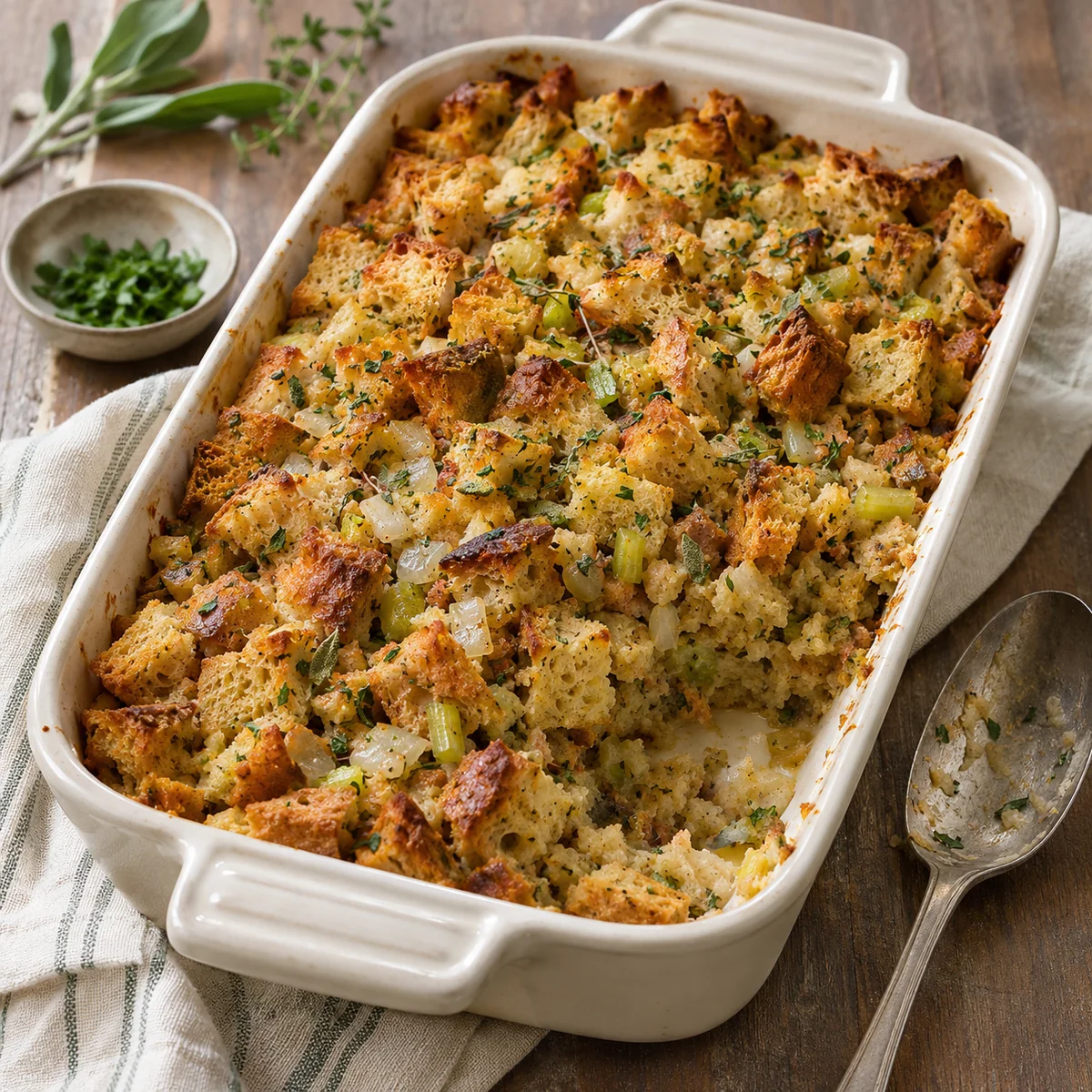
A classic stuffing baked in its own dish
Classic herb stuffing combines dried bread cubes with butter-softened celery, onion, sage, and thyme. Baked in a separate casserole dish, it develops a golden top while the center stays moist. It is a useful holiday side when you want familiar flavors without cooking the bread mixture inside a turkey.
This recipe makes ten side portions in a nine-by-thirteen-inch dish. It includes an oven-drying step for the bread, so you can start with a fresh loaf instead of remembering to leave bread out the night before. The vegetables cook while the bread dries, keeping the preparation manageable.
Ingredients and choosing the bread
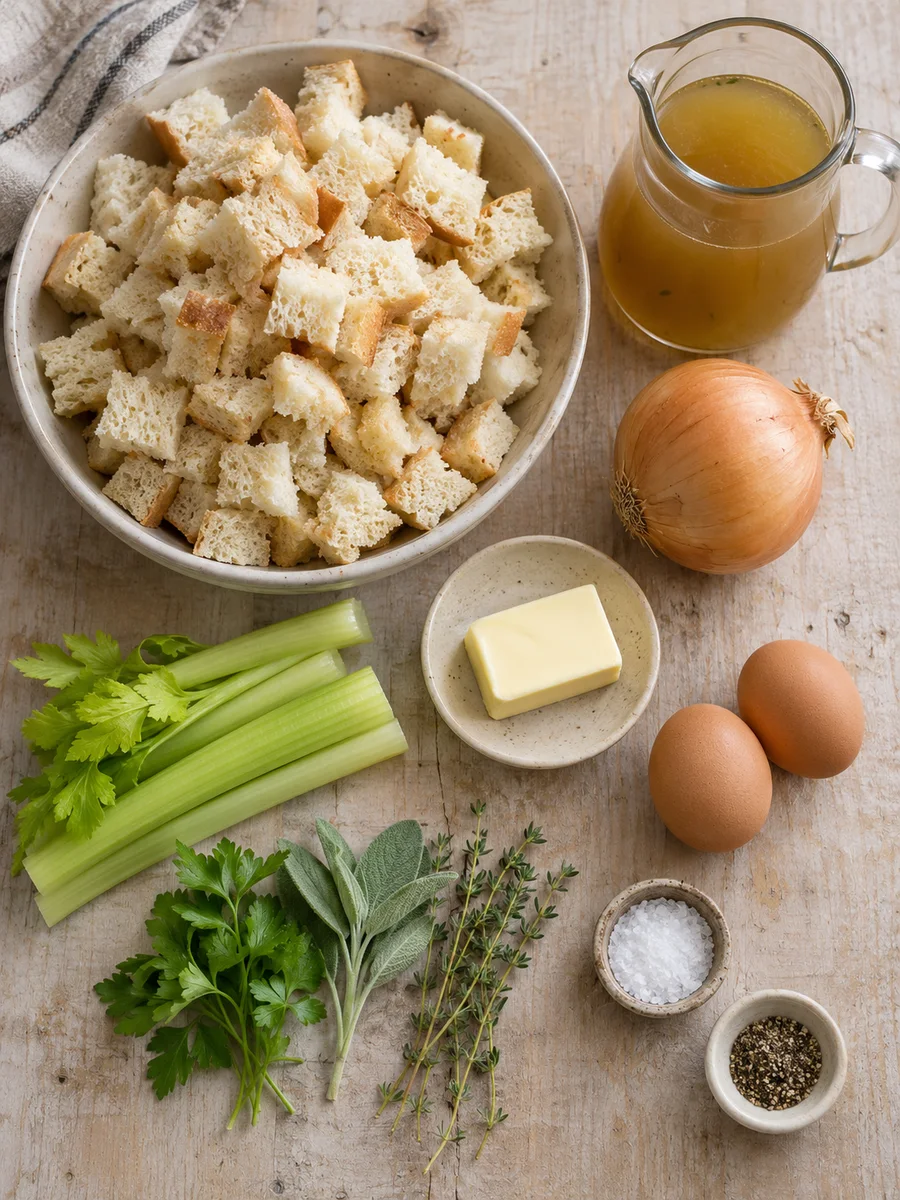
Use one pound of sturdy white bread or French bread, cut into roughly three-quarter-inch cubes. A very soft sandwich loaf can break down more easily once soaked. A very dense artisan loaf absorbs broth differently. Choose a bread you enjoy eating and use its weight as the main guide, since cups of bread cubes vary with their shape and how tightly they are packed.
Unsalted butter softens the onion and celery and carries the herb flavor through the bread. Finely dice the vegetables so every spoonful has small tender pieces rather than large crunchy chunks. Keep the skillet over moderate heat; the goal is softness rather than deeply caramelized onions.
Fresh sage and thyme give a traditional savory flavor, while parsley adds a lighter note. Chop sage finely so it does not form strong-flavored patches. If using dried herbs, start with one teaspoon dried sage and about three-quarters teaspoon dried thyme instead of the fresh amounts. Keep the fresh parsley if available.
Vegetable broth keeps the dish suitable for a vegetarian meal when the bread is vegetarian too. Low-sodium broth makes seasoning easier to control. Eggs help the moistened cubes hold together without turning the mixture into a firm bread pudding.
Dry the bread without overbrowning
Spread the cubes between two baking sheets instead of piling them deeply on one. Bake at 300°F (150°C), stirring halfway, until the cubes feel dry through the middle. They can take on a little color but should not become dark croutons.
Drying matters because fresh bread can become gummy when liquid is added. Bread that feels crisp outside but remains soft in the center is not ready. Break a larger cube open to check. Set the trays aside briefly before mixing, then increase the oven temperature for the casserole.
You can do this part up to two days ahead. Cool the bread fully before storing it in an airtight container at room temperature. Trapping warm steam in the container softens the cubes again.
Mix until moist, not soaked
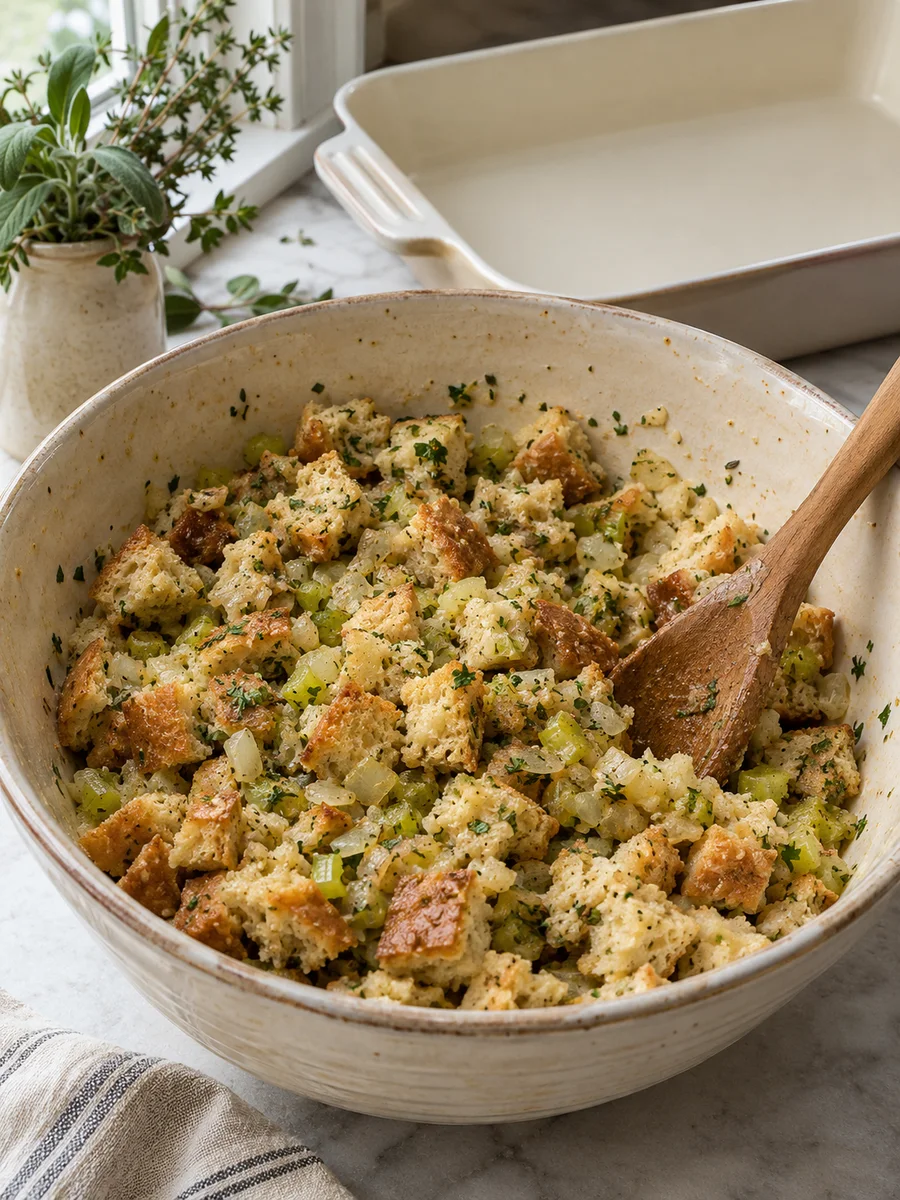
Cook the onion and celery in butter until tender. Add the herbs near the end, then let the mixture cool until warm. Very hot vegetables can begin cooking the eggs unevenly when everything is combined.
Whisk the eggs with two and a half cups of cool or room-temperature broth. Fold this through the bread and vegetables with a broad spoon. Leave the mixture for five minutes so the dry centers have time to absorb liquid before deciding it needs more.
Add the remaining broth in small amounts only if necessary. A cube should be moist through the middle and the mixture should gently hold together when pressed. Liquid should not pool under the bread. Different loaves absorb different amounts, so the final half-cup is an allowance rather than an instruction to pour it all in.
Bake for a crisp top and tender center
Spoon the mixture into the buttered dish loosely. Packing it down tightly produces a heavier texture and makes the center slower to heat. Cover with foil for the first thirty minutes so the middle heats without drying the surface.
Uncover for the final fifteen to twenty minutes. The top should become golden and some exposed corners can turn crisp. Check the center with a food thermometer and continue until it reaches 165°F (74°C). If the top is ready first, cover it loosely again.
Let the dish stand for ten minutes before serving. This short rest gives the broth time to settle through the bread. Use a large serving spoon to include both the soft interior and crisp top in each portion.
Make-ahead planning
Prepare the dry bread separately and refrigerate the cooked vegetables in a covered container up to one day ahead. Keep the broth and eggs separate until you are ready to assemble and bake. This avoids holding a bowl of wet raw stuffing for an extended time.
For a smaller gathering, halve all the ingredients, using one egg, and choose an approximately eight-inch-square baking dish. Begin checking earlier, while keeping the same center-temperature target. For a double batch, use two dishes instead of making one very deep layer.
Common questions and simple fixes
Why is the stuffing soggy?
Too much broth, insufficiently dried bread, or packing the mixture tightly can all contribute. Add liquid gradually and give it time to absorb. A wet mixture does not need more butter; it needs better control of the broth and bread moisture.
Why is it dry in the middle?
The bread may need more broth or the uncovered bake may have been too long. Before baking, check a larger cube after the five-minute soak. During baking, use foil again if the surface browns before the center is hot.
Is this stuffing or dressing?
Names vary by region. This version is always baked separately in a dish. Do not transfer these timing instructions to bread mixture cooked inside poultry.
Serving and leftovers
Serve beside cranberry sauce, green bean casserole, and a roast main. The recipe is a side dish rather than a complete meal. A little tart cranberry sauce works especially well against the buttery bread.
Refrigerate cooked leftovers in shallow containers within two hours, or one hour above 90°F (32°C). Keep at 40°F (4°C) or below and use within three to four days. Reheat covered with a small splash of broth if needed, checking that the center reaches 165°F (74°C).
More recipes to try
Keep these ideas for another meal or something to serve alongside.
FROM THE SEASONBITE KITCHEN
Classic Herb Stuffing with Celery and Onion
Golden bread stuffing with butter-softened celery, onion, sage, and thyme. Baked separately with a moist center and crisp top, plus make-ahead and bread-drying advice.
- PREP
- 25 minutes
- COOK
- 1 hour 15 minutes
- REST / WAIT
- 10 minutes
- TOTAL
- 1 hour 50 minutes
- YIELD
- 10 side-dish servings
Ingredients
Tap an ingredient as you go.
Instructions
Dry the bread
Heat a conventional oven to 300°F (150°C). Divide bread cubes between two rimmed baking sheets. Bake for 20–25 minutes, stirring halfway, until dry through the center but not deeply browned. Let cool briefly. Increase oven to 350°F (175°C) and butter a 9-by-13-inch baking dish.
Soften the vegetables
While bread dries, melt butter in a large skillet over medium heat. Add onion and celery and cook for 10–12 minutes, stirring, until softened without browning heavily. Stir in parsley, sage, thyme, salt, and pepper; cook for 1 minute. Remove from heat and let cool until warm rather than hot.
Moisten the bread
Put dried bread in a large bowl and add the warm vegetables and butter. Whisk eggs with 2 1/2 cups room-temperature or cool broth, then fold into the bread. Let stand 5 minutes. If still dry in the center, add extra broth 2 tablespoons at a time, up to 1/2 cup. Cubes should be damp and hold together when gently pressed, with no puddle at the bottom. Do not taste after adding eggs.
Bake covered, then uncover
Transfer loosely to the prepared dish without packing down. Cover with foil and bake for 30 minutes. Uncover and bake for another 15–20 minutes, until golden on top and a thermometer inserted into the center reaches 165°F (74°C). If browning too quickly, re-cover loosely while the center finishes cooking.
Rest and serve
Let stand 10 minutes, then serve warm. This recipe is intended for baking in a separate dish, not inside a turkey.
Side dish · American
Kitchen notes
- The bread amount is based on weight; cube volume varies by loaf. Dry bread absorbs broth differently, so add the last 1/2 cup gradually instead of automatically.
- Estimated time includes oven-drying the bread, with vegetable cooking overlapping that step. Already-dried bread saves approximately 20–25 minutes.
- Make ahead: dry and cool bread up to 2 days ahead and store airtight at room temperature. Cook vegetables up to 1 day ahead and refrigerate separately. Combine with broth and eggs just before baking.
- For a vegetarian dish, choose vegetarian broth and bread. Contains wheat, eggs, and milk; check packaged ingredients.
- Refrigerate cooked leftovers in shallow containers within 2 hours, or 1 hour above 90°F (32°C). Store at 40°F (4°C) or below and use within 3–4 days. Reheat to 165°F (74°C).
Allergens: Check every ingredient label and choose ingredients suitable for your dietary needs.
Find this recipe at https://seasonbite.com/classic-herb-stuffing-celery-onion/