QUICK & EASY
Creamy Tomato & Basil Pasta
Sweet cherry tomatoes, mellow garlic, and a splash of cream come together in a silky sauce that clings to every bite. A simple, comforting dinner in 25 minutes.
Published · Updated
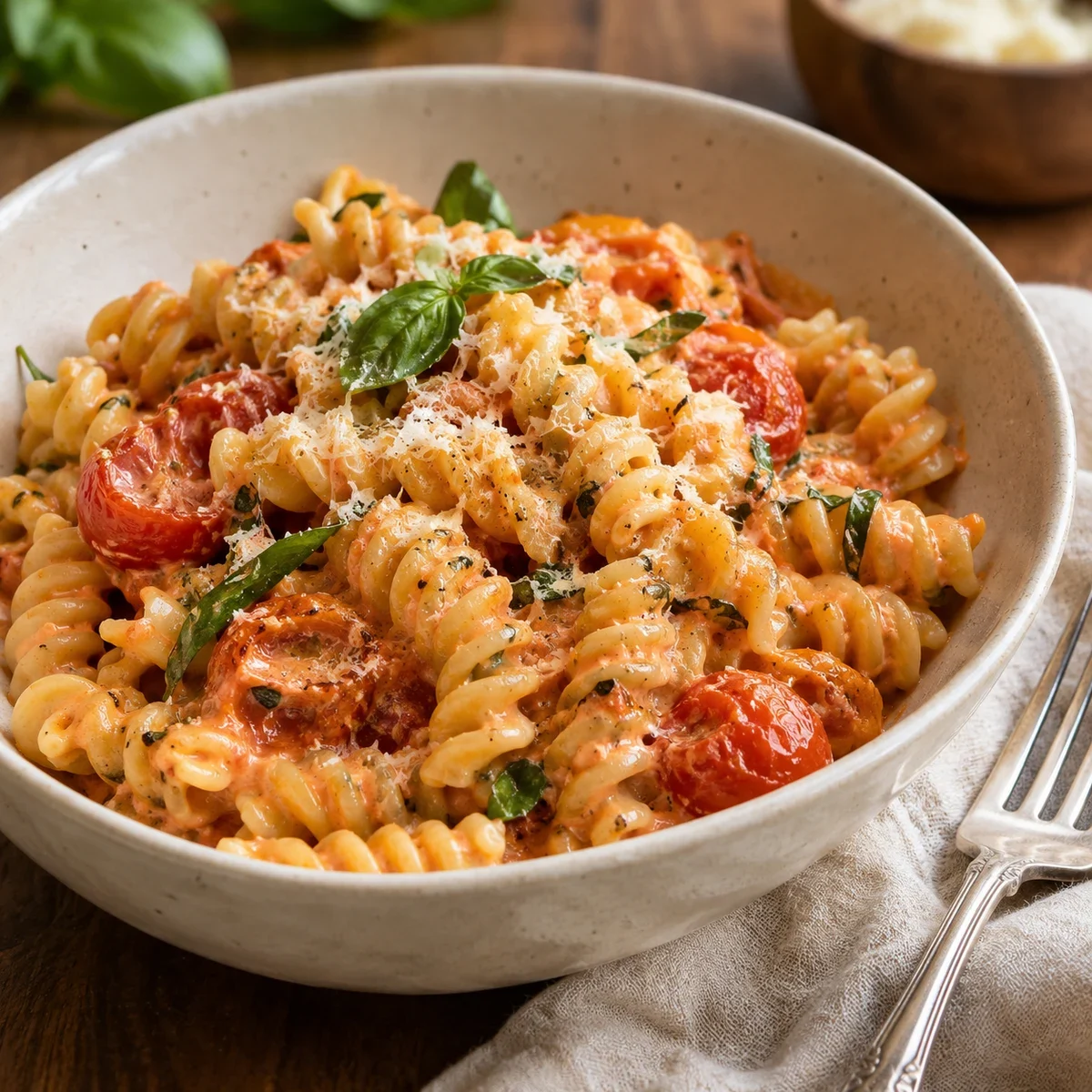
Creamy tomato and basil pasta for an easy dinner
Sweet cherry tomatoes, garlic, cream, and fresh basil turn a pan of fusilli into a comforting dinner in about 25 minutes. The tomatoes soften in olive oil while the pasta boils, so you can prepare the sauce and pasta together. A splash of starchy cooking water helps the creamy sauce cling to every twist.
The recipe makes three servings and is designed to take about 25 minutes. You cook the sauce while the pasta boils, so there is no need to spend an afternoon at the stove. Read through the recipe card first, set out your ingredients, and keep a mug nearby for saving some pasta water.
What makes this recipe useful
- A short ingredient list. The sauce uses familiar ingredients, with cherry tomatoes and basil providing most of its character.
- A flexible pasta shape. You can use fusilli, farfalle, or another short dried pasta already in your cupboard.
- Clear signs to look for. Soft, juicy tomatoes and a sauce that coats the pasta tell you more than the clock alone.
This is a simple main course rather than a complete meal plan. Serve it on its own when you want something uncomplicated, or add vegetables or a side salad to suit your appetite.
Choosing your ingredients
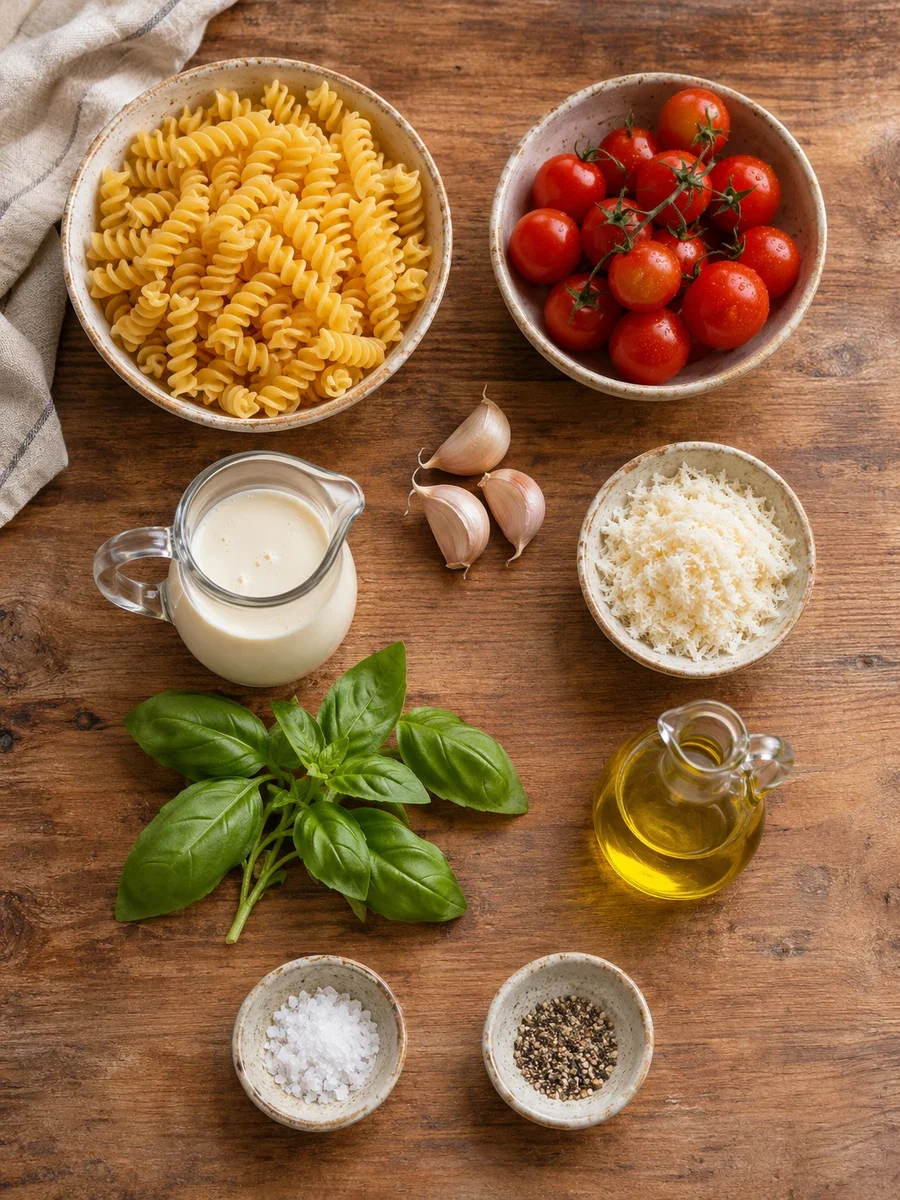
Cherry tomatoes
Choose tomatoes that feel firm but give slightly when gently pressed. Halve them before cooking so their juices can mix with the olive oil. They do not need to look perfect, but discard any that are moldy or spoiled.
Cherry tomatoes vary in sweetness and juiciness. Some soften quickly; others need another minute or two. Follow the visual cue in the instructions: they should look collapsed and release enough juice to make a loose sauce. Gently press stubborn pieces with the back of a spoon.
Dried pasta
Fusilli has little ridges that catch the sauce, while farfalle gives you a broader bite. Penne is another practical option. Pick one shape rather than mixing several, because their cooking times may differ.
Use the package directions as your starting point. Taste a piece near the end of cooking. It should be tender enough for you to enjoy, without becoming mushy. If you prefer softer pasta, cook it to your preference rather than feeling obliged to keep it very firm.
Cream and Parmesan
Heavy cream gives the sauce its smooth texture. Keep the heat low once you add it. A gentle simmer is enough; vigorous boiling is unnecessary.
Finely grated Parmesan blends more easily than large shavings. Stir it in after taking the skillet off the heat. The cheese adds salt as well as flavor, so taste the finished sauce before adding more seasoning. If you are serving a vegetarian, choose a Parmesan-style cheese made with vegetarian rennet.
Garlic and basil
Thin slices of garlic should soften and become fragrant without turning dark brown. Watch them closely, especially if your skillet heats quickly. Burnt garlic can make the sauce taste bitter.
Tear the basil shortly before adding it, and stir it in at the end. That way, its fresh aroma remains part of the finished dish rather than disappearing into a long simmer.
A few minutes of preparation
Halve the tomatoes, slice the garlic, and grate the cheese before turning on the heat. Put the cream within reach and leave the basil ready to tear. A large skillet gives you enough space to toss the cooked pasta without spilling.
You will also need a pot for the pasta, a colander, and a heat-safe mug or measuring jug. Place the mug beside the pot as a reminder to save some water before draining. Use care when lifting the pot or collecting hot water.
How to bring the pasta and sauce together
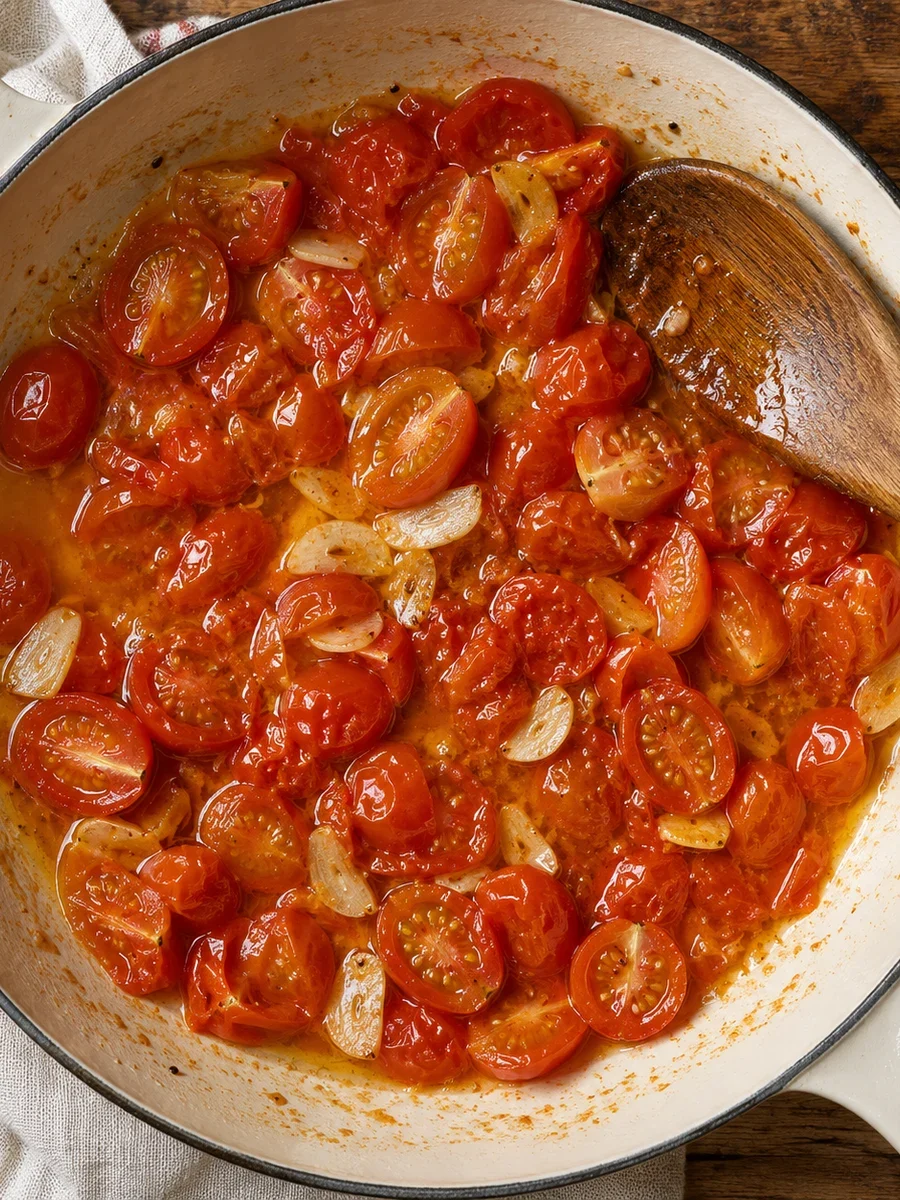
Cook the pasta while you start the sauce
Bring the pasta water to a boil, add salt, and cook the pasta according to its package. Meanwhile, soften the garlic in olive oil in your skillet. The garlic should smell pleasantly fragrant rather than toasted or sharp.
Add the tomatoes and seasoning. Stir occasionally as they soften. If the pan seems to be cooking too aggressively, lower the heat instead of trying to rush this stage. You want juicy tomatoes, not a dry layer stuck to the skillet.
Finish gently
Lower the heat before adding the cream. Stir until the tomato juices and cream come together, then let the mixture simmer gently for the time in the card.
Add the drained pasta and the first splash of reserved pasta water. Toss or stir until the sauce coats the pasta. It should look glossy and move easily when you stir, with no large pool of thin liquid at the bottom.
Remove the skillet from the heat before adding Parmesan and basil. Taste a small bite, adjust the seasoning, and serve while the sauce is still loose and warm.
If the sauce needs a little help
The sauce looks too thick
Pasta continues to absorb moisture after it is drained. Add reserved pasta water a tablespoon at a time, stirring between additions. A little goes a long way, so avoid pouring in the whole mug at once.
The sauce looks too thin
Give the pasta and sauce a little time together over low heat, stirring gently. The sauce may thicken as it coats the pasta. Stop before the pasta becomes overcooked; a slightly loose sauce is preferable to dry noodles.
The cheese forms small clumps
Take the skillet off the heat and stir gently with a small splash of warm pasta water. Finely grated cheese helps, but very hot sauce or adding too much cheese at once can make blending harder. Add it gradually next time.
Simple variations and substitutions
A handful of baby spinach can be stirred into the warm sauce until wilted. Cook firmer vegetables separately before adding them, so you do not have to overcook the pasta while waiting for the vegetables to soften.
For a little heat, add a small pinch of chili flakes. Start with less than you think you need, especially when cooking for people with different preferences.
Changing the dairy or using gluten-free pasta may change the sauce and cooking time. Follow the pasta package and check the labels of all ingredients. A substitution should suit your needs, but it should not be assumed to produce exactly the same result.
What to serve alongside
A green salad, steamed green beans, or roasted zucchini makes a pleasant side. Choose a simple dressing or seasoning so the tomato and basil remain the main flavors.
For a more generous meal, serve bread alongside to catch the sauce. For a smaller appetite, dish up a modest portion first and keep the rest available for seconds. The recipe card gives a yield of three servings, but appetites naturally vary.
Leftovers and reheating
Store leftover pasta in a covered container in the refrigerator for up to three days. Letting food sit out for a long time is not a useful way to cool it; put leftovers away promptly and follow local food-safety guidance.
Reheat a portion gently in a skillet with a splash of water or milk. Stir as it warms, adding only enough liquid to loosen the sauce. Heat it thoroughly throughout rather than judging by the temperature at the edge of the pan.
This sauce is best freshly made. Freezing can change the texture of the cream, so a refrigerated portion is the more practical choice when you plan to eat it soon. Add a little fresh basil after reheating if you have some left.
Ready to cook?
The recipe card below contains the measured ingredients and full instructions. Check off ingredients as you use them, print the card for the kitchen, or use the Jump to Recipe button near the title whenever you return.
More help with this recipe
Can I use a different pasta shape?
Yes. Use the same 300 g dry weight of a short shape such as penne or shells, and follow its package timing. Reserve cooking water before draining; the amount needed to loosen the sauce can vary.
When should I add the basil?
Tear the leaves shortly before serving and add them off the heat with the Parmesan. Long simmering dulls their fresh flavor. Keep a few leaves aside for the individual bowls if you like.
More recipes to try
Keep these ideas for another meal or something to serve alongside.
FROM THE SEASONBITE KITCHEN
Creamy Tomato & Basil Pasta
Sweet cherry tomatoes, mellow garlic, and a splash of cream come together in a silky sauce that clings to every bite. A simple, comforting dinner in 25 minutes.
- PREP
- 5 minutes
- COOK
- 20 minutes
- TOTAL
- 25 minutes
- YIELD
- 3 servings
Ingredients
Tap an ingredient as you go.
Instructions
Cook the pasta
Bring a large pot of water to a boil and salt generously. Add the pasta and cook according to the package directions until al dente. Before draining, carefully reserve 1 cup of the pasta water.
Soften the garlic
While the pasta cooks, heat the olive oil in a large skillet over medium-low heat. Add the garlic and cook for 1–2 minutes, stirring, until fragrant but not browned.
Cook the tomatoes
Add the cherry tomatoes, ½ teaspoon salt, and black pepper. Increase the heat to medium and cook for 8–10 minutes, stirring occasionally and gently pressing the tomatoes with a spoon, until softened and juicy.
Make it creamy
Reduce the heat to low. Stir in the heavy cream and simmer gently for 2 minutes. Add the drained pasta and ¼ cup of the reserved pasta water, tossing until coated. Add more pasta water, a tablespoon at a time, if the sauce needs loosening.
Finish and serve
Remove the skillet from the heat. Stir in the Parmesan and torn basil, then taste and adjust the seasoning. Divide between 3 bowls and serve with extra Parmesan.
Main course · Italian-inspired
Kitchen notes
- Keep the cream at a gentle simmer; a hard boil can make the sauce separate.
- Use Parmesan made with microbial or vegetarian rennet if serving vegetarians.
- Refrigerate leftovers in a covered container for up to 3 days. Reheat gently in a skillet with a splash of water or milk.
- The sauce is best freshly made. Freezing may change the texture of the cream.
Allergens: Check every ingredient label and choose ingredients suitable for your dietary needs.
Find this recipe at https://seasonbite.com/creamy-tomato-basil-pasta/
A LITTLE EXTRA HELP
Before you get cooking
Can I use canned tomatoes?
Yes. Swap the cherry tomatoes for one 400 g can of chopped tomatoes. Simmer until thickened before adding the cream. Canned tomatoes can taste sharper, so taste and adjust the seasoning at the end.
Can I make it vegetarian?
Use Parmesan-style cheese made with vegetarian rennet. Traditional Parmesan often uses animal rennet, so check the label.
How do I store leftovers?
Refrigerate in a covered container for up to 3 days. Reheat gently with a splash of water or milk to loosen the sauce. Fresh basil is best added just before serving.