SOUPS
Chicken and Sausage Gumbo with a Dark Roux
A rich chicken and smoked sausage gumbo with a brown roux, onion, green pepper, and celery. Includes clear roux cues, gentle simmering instructions, and rice for serving.
Published · Updated
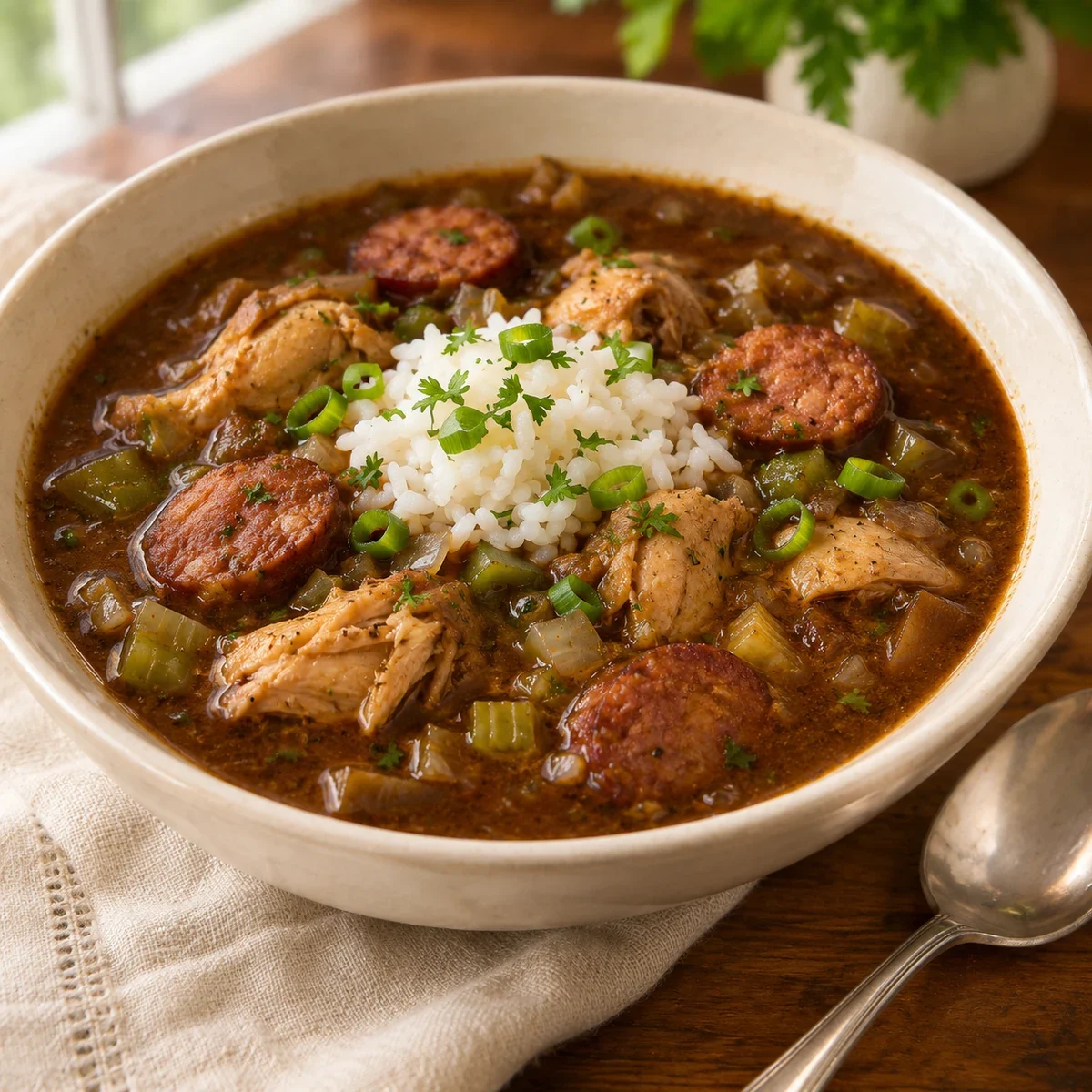
Chicken and sausage gumbo with a rich brown roux
A pot of chicken and sausage gumbo begins with flour and oil, stirred patiently until they turn a deep brown. That roux gives the broth a toasted, savory foundation. Smoked sausage, tender chicken thighs, onion, green pepper, and celery turn it into a substantial meal to serve over rice.
This version uses boneless chicken thighs and ready-made unsalted stock, so you do not need to cook a whole chicken or make stock first. It is still a recipe to make when you have time to stay near the stove. Allow about two hours, including chopping and a steady simmer; the roux should be guided by its color rather than rushed to match a timer.
The recipe makes six generous servings. Rice is cooked separately and added to the bowls, which keeps it from absorbing the broth while the gumbo simmers. Have every vegetable chopped and your stock measured before beginning the roux. Once you start stirring, that is where your attention needs to stay.
What goes into this gumbo
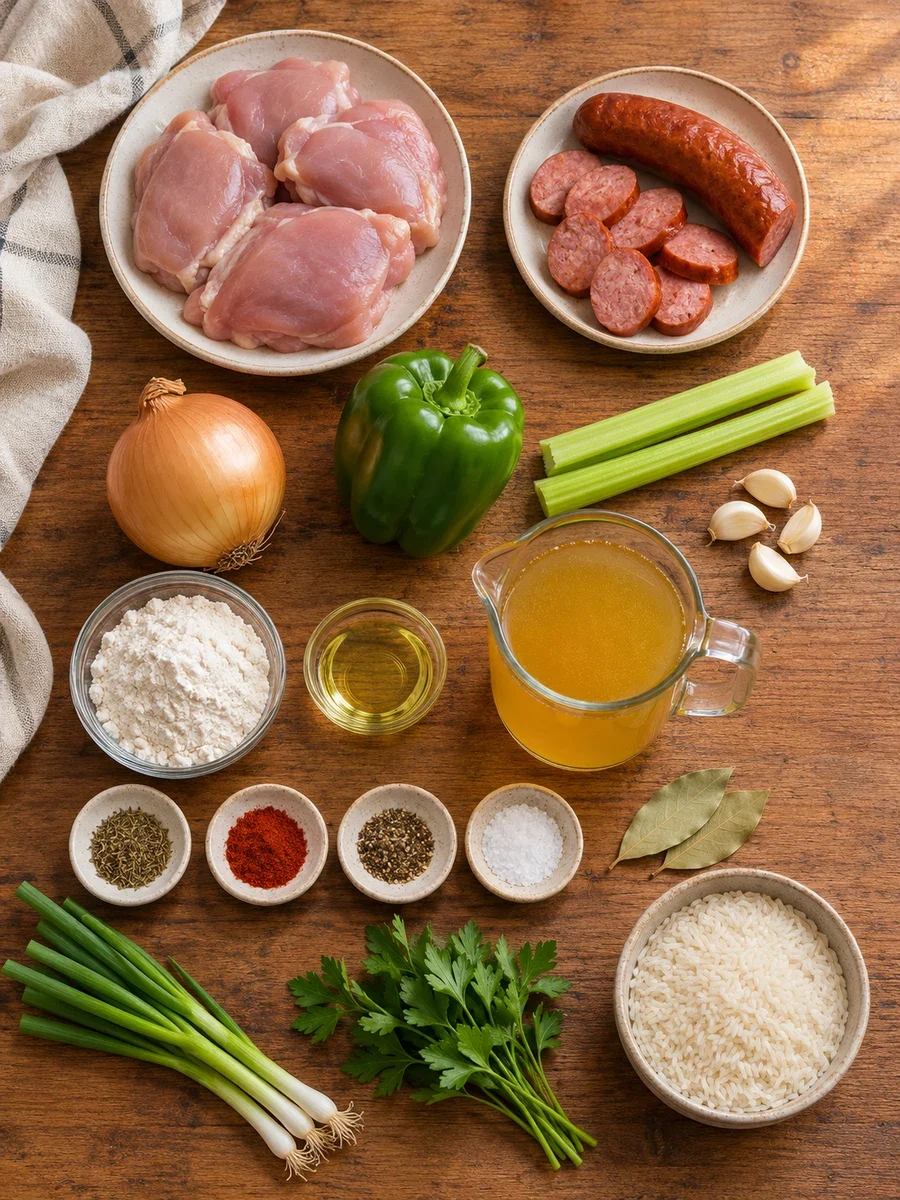
Chicken thighs
Use boneless, skinless chicken thighs. Leave them whole for simmering, then lift them out and cut or pull them into bite-size pieces. Whole thighs are easier to check with a thermometer than very small pieces, and the finished chicken can be divided evenly among the bowls.
Trim away large loose pieces of fat, but there is no need to remove every small seam. Pat the chicken dry with paper towels and keep it separate from ready-to-eat ingredients. Wash hands, utensils, and work surfaces after handling raw chicken.
Smoked sausage
Choose fully cooked smoked andouille sausage, or another fully cooked smoked sausage if andouille is unavailable. Slice it into quarter-inch rounds. Andouille can be fairly spicy and salty, so taste your chosen sausage before deciding how much cayenne or salt to add later.
This recipe is written for fully cooked sausage, not raw fresh sausage. Check the package rather than assuming that every product with the same name has been cooked. If using a different type, its cooking requirements and contribution to the broth will need to be considered.
Onion, green pepper, and celery
These three vegetables form the aromatic base. Cut them into fairly small, even pieces so they soften in the roux and blend into the broth. Keep the garlic separate because it needs less time in the pot.
A yellow onion and green bell pepper give this version its savory character. You can use a different bell pepper, but the flavor will become sweeter. Removing the pepper's seeds and thick inner ribs makes it easier to dice evenly.
Flour, oil, and stock
All-purpose flour and a neutral oil form the roux. Measure both before heating the pot. A heavy-bottomed Dutch oven spreads the heat more evenly than a very thin saucepan and provides enough room for stirring.
Use unsalted chicken stock so you can season after the sausage has simmered. A low-sodium stock is a practical alternative, but the amount of salt needed at the end may be lower. Keep extra water or unsalted stock available for adjusting the consistency.
Seasonings
Dried thyme, paprika, black pepper, and bay leaves season the broth without relying on a premixed blend. Cayenne is optional. Begin with the listed small amount, or omit it for a milder pot and serve hot sauce at the table.
This is a roux-based version without okra, tomatoes, or seafood. Gumbo has many household and regional variations; these choices describe this particular recipe rather than a rule for every gumbo.
Before you start the roux
Set the chopped onion, pepper, and celery in a bowl beside the stove. Have a long-handled wooden spoon or heatproof spatula ready, and clear a safe spot where you can move the pot off the burner if it heats too quickly. Measure the stock into a jug so it can be added gradually.
Brown the sausage first in a small amount of oil, then transfer it to a plate. This develops flavor on the sliced surfaces. Leave the light brown cooking marks in the pot, but remove any blackened pieces before making the roux. Reduce the heat and let the pot settle briefly if it is very hot.
How to make a dark roux
Add the remaining oil and flour to the pot. Stir over medium-low heat, reaching across the base and into the corners so the flour does not sit still against a hot spot. The mixture begins pale, then passes through golden and caramel tones before becoming a milk-chocolate brown.
Allow roughly 30–40 minutes, but expect your pan and burner to affect that estimate. Lower the heat if the mixture colors unevenly or seems difficult to control. It is better to take longer than to burn the flour trying to save a few minutes.
Hot roux can cause serious burns. Keep stirring carefully, avoid splashing, and do not taste it from the spoon. When you add the vegetables, stand back from the steam and stir with the long-handled utensil.
A toasted aroma is expected. Black specks or an acrid, burnt smell are signs to stop. Do not try to hide burnt roux with extra seasoning. Let it cool safely, discard it, clean the pot, and begin again.
Build the broth and simmer gently
Stir the onion, pepper, and celery into the brown roux and cook until they begin to soften. Add the garlic near the end, then take the pot off the heat briefly before adding room-temperature stock in small portions. Stir each addition smooth before pouring in more. The first addition may bubble and steam, so pour carefully and keep your face and hands away from the rising steam.
Return the pot to the heat and stir in the thyme, paprika, pepper, bay leaves, optional cayenne, browned sausage, and chicken. Bring it just to a simmer, then reduce the heat. A gentle, partly covered simmer gives the chicken time to cook while allowing the broth to come together without rapidly reducing.
Stir occasionally along the bottom of the pot. Cook until the chicken is tender and reaches at least 165°F / 74°C in the thickest part, measured with a food thermometer. Timing alone is not a reliable check for doneness. If it needs longer, continue simmering and check again.
Lift the cooked thighs onto a clean plate. When safe to handle, cut or pull them into bite-size pieces and return them to the pot. Simmer briefly to bring everything back together. Remove both bay leaves before serving.
Adjust the consistency and seasoning
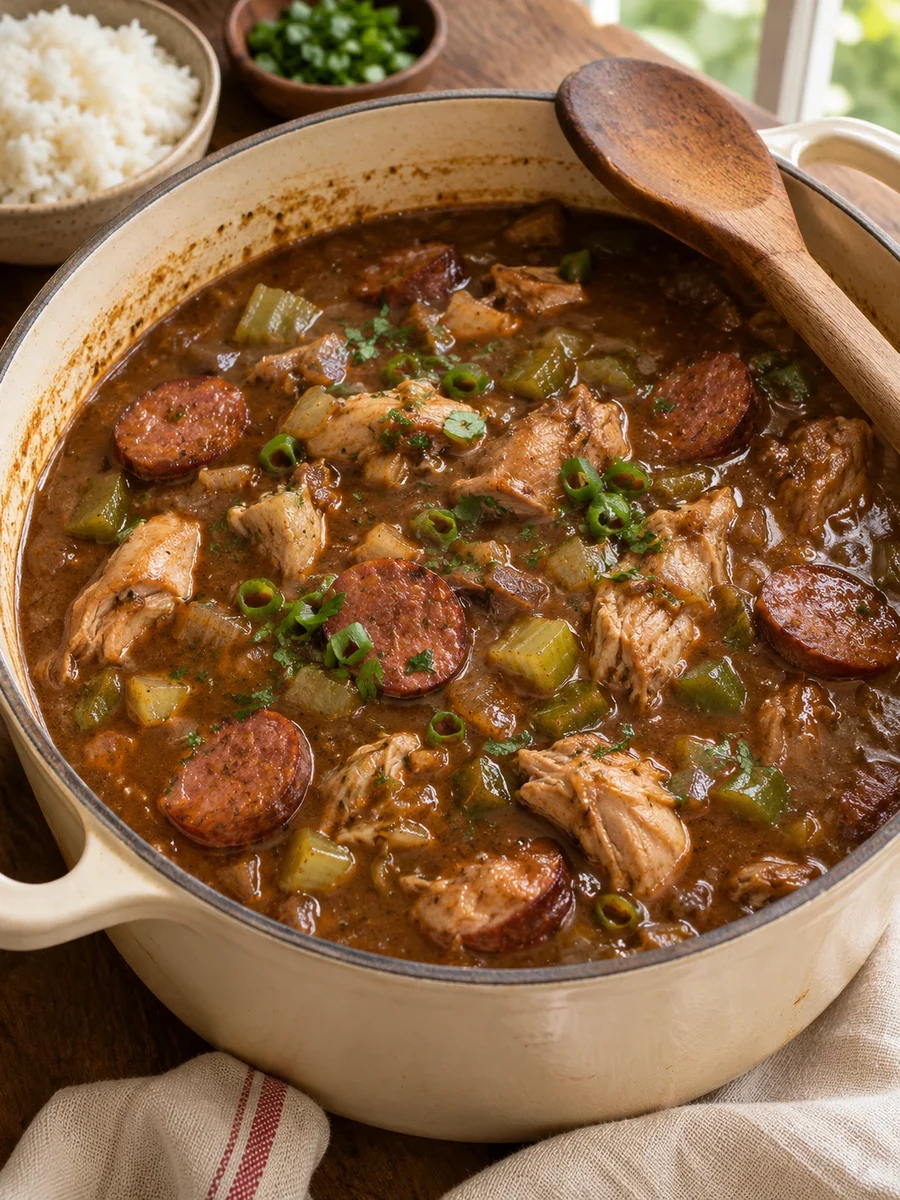
The gumbo should be easy to ladle, with a broth that lightly coats a spoon. It does not need to be as thick as a cream soup or gravy. A dark roux contributes flavor as well as body, and the finished consistency is a matter of preference.
If the pot has reduced too much, add a little hot water or unsalted stock. If it is looser than you prefer, simmer uncovered for a little longer, stirring regularly. Do not sprinkle raw flour directly into the finished gumbo; it can form lumps and leave an uncooked flour taste.
Taste before adding salt. Sausage and stock vary enough that a fixed large amount can make the finished pot too salty. Start with a small pinch, stir, and taste again. Add extra heat at the table so everyone can season their own bowl.
Rice, garnishes, and serving
Cook the rice in a separate saucepan according to its package while the gumbo simmers. One cup of dry long-grain white rice generally gives enough cooked rice for six modest scoops. The rice amount is a serving guide, so adjust it to suit appetites.
Spoon rice into each bowl, ladle the gumbo around it, and finish with chopped scallions and parsley. Offer hot sauce separately. A simple salad or bread can accompany the meal, but the chicken, sausage, broth, and rice already make a substantial bowl.
Keeping rice separate also helps with leftovers. Rice left in the gumbo absorbs liquid and makes it harder to judge how much stock to add when reheating.
Make-ahead, storage, and reheating
If cooking ahead, cool the gumbo promptly in shallow containers rather than leaving a large pot on the counter. Refrigerate within two hours of cooking, or within one hour if the surrounding temperature is above 90°F / 32°C. Keep the refrigerator at 40°F / 4°C or below.
Use refrigerated gumbo within three to four days. For longer storage, freeze it in meal-size portions; two to three months is a useful quality target. Label containers with the date and keep the rice separately.
Thaw frozen portions in the refrigerator. Reheat the gumbo to 165°F / 74°C throughout, stirring so the center heats as thoroughly as the edges; bring the soup to a rolling boil when reheating. Add a small amount of water or unsalted stock if it has thickened. Reheat only what you plan to serve rather than repeatedly warming the whole batch.
Questions before cooking
Can I use chicken breast?
Chicken breast can become dry during a long simmer. This draft is written around thighs; using breast requires checking its temperature earlier and removing it as soon as it is cooked, then returning it near the end. The exact timing has not been established here.
Can I use a gluten-free flour instead?
The roux is developed around wheat flour. A gluten-free flour may brown or thicken differently, so a direct substitution has not been established. Use a gumbo recipe specifically developed for that flour if a gluten-free version is essential, and check the sausage and stock labels too.
Can I use a ready-made Cajun seasoning?
You can season to your own preference, but blends vary in salt and heat. This recipe lists individual seasonings to make the amounts clear. Do not add a generous amount of a salty blend on top of all the listed seasonings without tasting first.
Ready to make your pot of gumbo?
Use the card below for the measured ingredients and numbered method. Chop first, give the roux your attention, and check the chicken with a thermometer. The estimated cooking time is a planning guide, while color, tenderness, and temperature tell you when each stage is ready.
More help with this recipe
Does the sausage need to be fully cooked?
Yes. The card is written for fully cooked smoked sausage, not raw fresh sausage. Check the package; two products sold under similar names can have different cooking requirements.
Should the rice simmer in the gumbo pot?
No. Cook it separately and add it to individual bowls. Rice left in the gumbo absorbs broth and changes the consistency, particularly during storage and reheating.
More recipes to try
Keep these ideas for another meal or something to serve alongside.
FROM THE SEASONBITE KITCHEN
Chicken and Sausage Gumbo
A roux-based chicken and smoked sausage gumbo served with rice. Allow about 2 hours, and follow the roux color and chicken temperature rather than the clock alone.
- PREP
- 25 minutes
- COOK
- 1 hour 40 minutes
- TOTAL
- 2 hours 5 minutes
- YIELD
- 6 servings
Ingredients
Tap an ingredient as you go.
Instructions
Prepare everything first
Chop the onion, bell pepper, celery, and garlic. Measure the stock and seasonings. Set a heavy 5–6 quart Dutch oven over medium heat. Keep the garlic separate from the other vegetables.
Brown the sausage
Add 1 teaspoon oil and the sliced fully cooked sausage. Cook for 5–7 minutes, turning, until lightly browned. Transfer to a plate. Remove any blackened debris. Reduce the heat and let the pot settle briefly before adding the roux ingredients.
Cook the roux
Add the remaining 1/2 cup oil and the flour. Stir constantly over medium-low heat, scraping the bottom and corners, until evenly milk-chocolate brown, approximately 30–40 minutes. Lower the heat if coloring too quickly. If it smells burnt or has black specks, cool safely, discard, clean the pot, and start again.
Soften the vegetables
Carefully stir the onion, bell pepper, and celery into the hot roux, avoiding steam and splashes. Cook, stirring, for 6–8 minutes until beginning to soften. Add garlic and cook for 1 minute.
Add stock gradually
Take the pot off the heat briefly. Slowly add the room-temperature stock in small portions, stirring each addition smooth. Keep clear of steam. Return to the heat and add thyme, paprika, black pepper, bay leaves, optional cayenne, browned sausage, and raw chicken thighs.
Simmer and cook the rice
Bring to a gentle simmer. Partly cover and cook for about 35–45 minutes, stirring occasionally along the bottom, until the chicken is tender and reaches at least 165°F / 74°C in the thickest part on a food thermometer. Continue cooking if needed. Meanwhile, cook the rice separately following its package directions.
Finish the gumbo
Transfer the cooked chicken to a clean plate. When safe to handle, cut or pull it into bite-size pieces. Return it to the pot and simmer for 5 minutes. Remove both bay leaves. Add a little water or unsalted stock if too thick. Taste before adding salt; start with 1/4 teaspoon only if needed, then adjust gradually.
Serve
Divide the cooked rice among six bowls and ladle the gumbo over or around it. Garnish with scallions and parsley. Offer hot sauce separately. Keep any leftover rice separate from the gumbo.
Main course · Louisiana-inspired
Kitchen notes
- Estimated time: 25 minutes preparation plus about 100 minutes cooking. Roux color, pan, burner, and simmering conditions can extend the time; chicken must reach 165°F / 74°C regardless of the estimate. Rice cooks separately during the simmer.
- Use fully cooked smoked sausage. Salt and heat vary by brand; season after simmering rather than adding a large fixed amount at the beginning.
- The hot oil-flour mixture can cause burns. Stir with a long-handled utensil, keep clear of steam, and never taste the hot roux. Burnt roux must be replaced.
- Refrigerate promptly in shallow containers within 2 hours, or 1 hour above 90°F / 32°C. Keep at 40°F / 4°C or below and use within 3–4 days.
- Reheat leftovers to 165°F / 74°C throughout and bring the soup to a rolling boil, stirring. Freeze separately from rice; use within 2–3 months for best quality.
- Contains wheat. Sausage and stock may contain other allergens; check labels. Gluten-free substitutions have not been established.
Allergens: Check every ingredient label and choose ingredients suitable for your dietary needs.
Find this recipe at https://seasonbite.com/secret-recipe-for-flavorful-chicken-and-sausage-gumbo/