DESSERTS
Spiced Orange Clove Cookies with Orange Glaze
Orange zest, warm spices, and a simple orange glaze make these drop cookies a welcoming addition to your cookie plate. Includes measured ingredients and clear baking cues.
Published · Updated

Orange cookies with a warm spice finish
These spiced orange clove cookies pair fresh orange zest with cinnamon, ginger, cloves, and nutmeg. A simple orange-juice glaze adds a sweet citrus finish without needing a piping bag or special decorating tools. They are drop cookies, so there is no rolling out dough or cutting shapes.
The dough uses both zest and juice, but they do different jobs. Zest brings the concentrated orange aroma; juice adds liquid and a little acidity. Keep the juice measured rather than squeezing an extra splash into the bowl. Too much liquid changes how the cookies spread.
Plan for mixing, two batches in the oven, cooling, and setting the glaze. The recipe card allows about an hour and a half altogether, with much of that time spent waiting. The 10–12 minute baking time is for each tray, not the whole batch.
What you need before you start
Set out two baking sheets, parchment paper, a mixing bowl for the dry ingredients, a larger bowl for the dough, and a cooling rack. An electric hand mixer makes creaming easier, though a sturdy spoon can be used with more effort. A small scoop or kitchen scale helps keep the cookies similar in size.
Read the measured ingredient list in the card before beginning. Soften the butter ahead of time and take the egg out while you prepare the other ingredients. Preheat the oven fully before putting in the first tray. A cool or partly heated oven makes baking times less useful.
Ingredient notes that make a difference
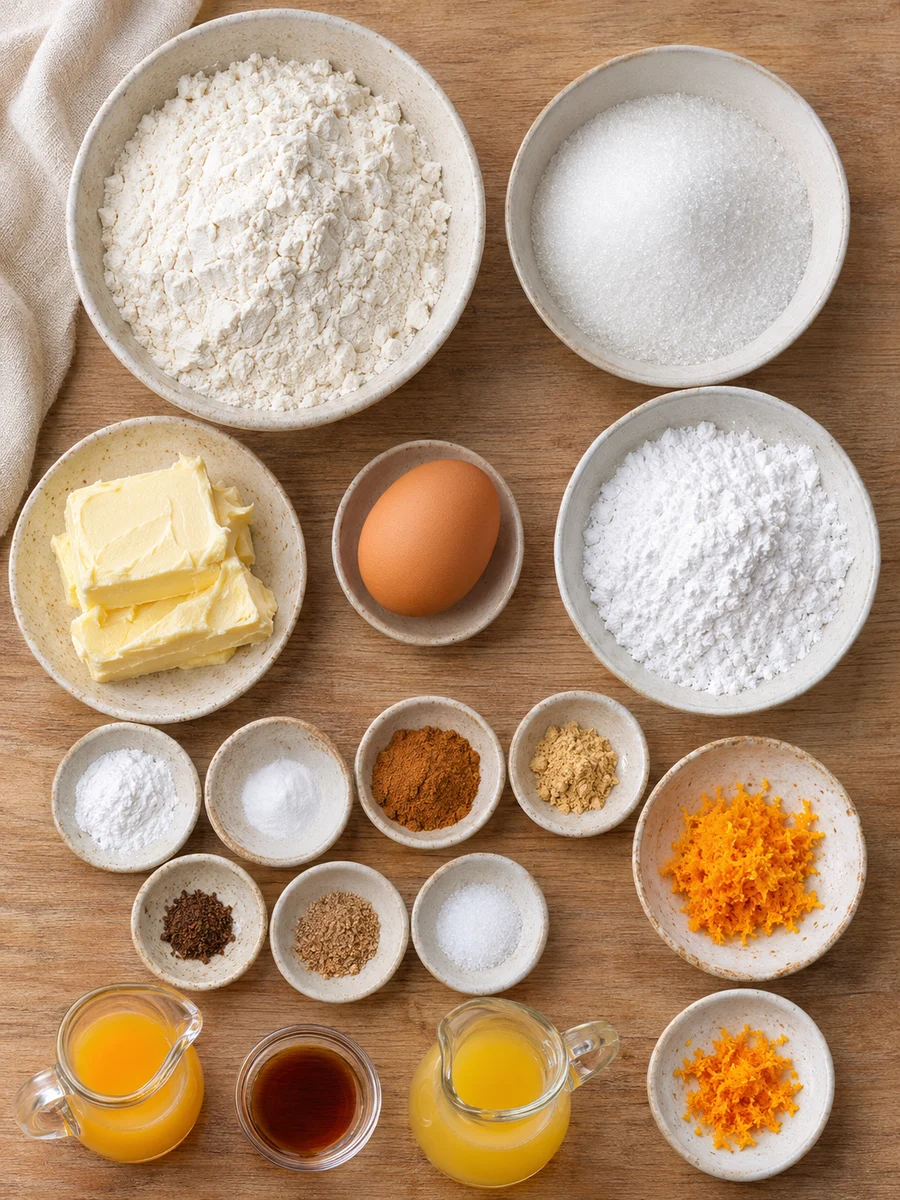
Flour
Use all-purpose flour. The card includes 240 g as the working weight for two cups. Weighing is the simplest way to repeat the same amount. If measuring by volume, spoon flour into the cup and level the top; packing it down can leave the dough too dry.
Butter and sugar
The butter should give when pressed but still hold its shape. It should not look oily or have melted edges. Beat it with the granulated sugar until the mixture becomes paler and slightly fluffy, scraping the bowl so no dense layer remains at the bottom.
This recipe uses granulated sugar rather than brown sugar. Substituting a different sugar changes more than sweetness: moisture, flavor, and spread can change too. Keep the listed sugar for your first batch.
Orange zest and juice
Wash and dry the orange before zesting it. Remove only the colored outer layer; the white pith underneath can taste bitter. Measure one tablespoon of finely grated zest for the dough. Zest the fruit before cutting and juicing it, since a whole orange is easier to hold.
Fresh juice works in both the dough and glaze. Strain out seeds and larger pieces of pulp. Orange sizes vary, so have a second orange available if the first does not provide enough juice or zest.
Cloves and the supporting spices
Cloves have a strong flavor, so measure the quarter teaspoon level rather than heaped. Cinnamon supplies most of the warm spice background, with ginger and nutmeg adding depth. Whisk the spices into the flour thoroughly to avoid a concentrated pocket in one cookie.
Baking powder, baking soda, and salt
Use the specified quantities of both raising agents; they are not interchangeable spoon for spoon. This draft retains the original recipe's combination. Check their freshness and measure carefully. Fine salt disperses more evenly than large flakes.
How to mix and shape the dough
Whisk the flour, raising agents, spices, and salt in a medium bowl. In the larger bowl, beat the softened butter and sugar for about two to three minutes, then mix in the egg, measured zest, orange juice, and vanilla. Scrape down the sides and bottom of the bowl.
Add the flour mixture on low speed, stopping as soon as no dry streaks remain. Finish with a spatula if needed. The dough should hold together when scooped. If it is unusually sticky because the butter became warm, cover and refrigerate it briefly until it is easier to handle; that extra chilling time is not included in the card.
Divide the dough into about 24 portions, roughly 26 g each. Exact yield depends on how much dough remains on the bowl and beaters. Shape each portion into a rounded mound and space them about two inches apart. Do not crowd the tray just to fit the entire batch into the oven at once.
Baking cues to watch for
Bake one tray at a time on the middle rack at 350°F / 175°C in a conventional oven. Begin checking after 10 minutes. The edges should look set and lightly golden, while the centers should lose their wet shine. The cookies can still feel delicate when hot.
Let them rest on the baking sheet for five minutes before moving them to the rack with a thin spatula. Avoid trying to lift them immediately: hot cookies can bend or break even when they are baked through. Allow the tray to cool before loading another batch.
A dark pan, a different portion size, or an oven that runs hot can change the result. If you are unsure about spread, bake two portions first and inspect them before baking the remaining dough. Use this small batch to adjust spacing and checking time, rather than changing several ingredients at once.
A bright orange glaze
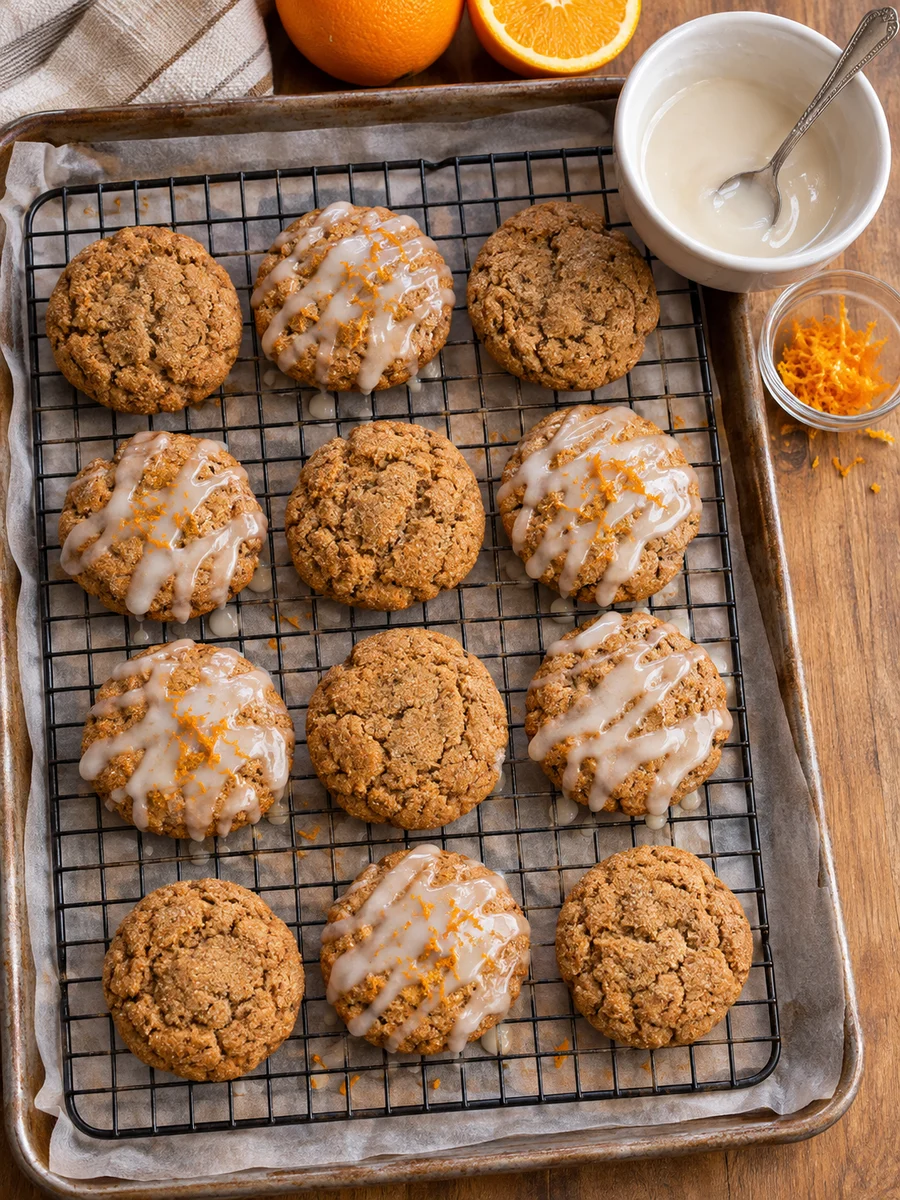
Wait until the cookies are completely cool. Sift the powdered sugar into a bowl, then whisk in one and a half tablespoons of orange juice. Add more juice a little at a time, up to about two tablespoons total, until the glaze falls from the spoon in a thick ribbon.
If the glaze immediately disappears into the cookie, either it is too thin or the cookie is still warm. Let the cookies cool further and thicken the glaze with a little more sifted powdered sugar if necessary. A glaze that will not drizzle needs only a few drops of juice at a time.
Drizzle with a spoon or fork and add a little fresh zest if you like. Leave the cookies in a single layer until the surface is dry enough to handle, allowing at least 15 minutes. Humidity and the thickness of the drizzle affect how quickly it sets.
Troubleshooting your batch
The cookies spread too much
Warm butter, a warm baking sheet, and flour measurement can all contribute. Cool the empty tray and chill the remaining dough until it holds its shape. Check that the butter was softened rather than melted. A small test bake is more useful than adding a large, unmeasured amount of flour.
The cookies are dry or crumbly
Check the flour measurement and bake time first. Scooping flour directly from the bag can pack too much into the cup. Cookies also firm up as they cool, so waiting for them to feel firm in the oven can lead to overbaking.
The orange flavor is too quiet
Zest is the main source of orange aroma. Make sure you measured it rather than relying on a lightly zested small orange. Do not compensate by pouring extra juice into the dough; adjust zest in a future batch instead.
Serving and storing
Serve the cookies with tea or coffee, or include them on a dessert plate with simple butter cookies. Let the glaze set before arranging them on a platter. If packing a gift box, use parchment between layers and avoid pressing the cookies together while the glaze is tacky.
For best quality, store the fully cooled cookies in an airtight container in a cool place and plan to enjoy them within about three days. Moisture can soften the glaze over time. For longer storage, freeze the unglazed, baked cookies in a well-sealed container for up to two months as a quality guideline, then thaw and glaze before serving.
Questions before baking
Can I leave off the glaze?
Yes. The orange zest and spices are already in the dough. The glaze adds sweetness and another layer of citrus, but the cookies can be served plain.
Can I make these gluten-free or egg-free?
Those substitutions have not been established for this draft. Changing flour or replacing the egg affects structure and spread. Use a recipe developed for your dietary requirement rather than assuming a direct substitution will behave the same way.
What allergens are present?
The listed recipe contains wheat, egg, and dairy. Check ingredient labels, including the powdered sugar and any substitutions, if preparing food for someone with an allergy.
Ready to bake?
Use the printable card below for the measured ingredients and numbered method. Check off ingredients as you prepare them, and keep the cooling and glaze-setting time in your plan. For a repeat visit, the Jump to Recipe button takes you straight to the card.
More help with this recipe
Is chilling the dough required?
Only if it is too warm or sticky to portion. The basic timing does not include an optional dough chill. Chill until manageable rather than adding extra flour immediately, which can make the cookies drier.
Can I increase orange flavor with extra dough juice?
Extra liquid changes the dough. Use the measured zest and juice first; the glaze supplies more orange flavor after baking. Grate the colored peel rather than the bitter white pith.
More recipes to try
Keep these ideas for another meal or something to serve alongside.
FROM THE SEASONBITE KITCHEN
Spiced Orange Clove Cookies
Orange-spiced drop cookies with cinnamon, ginger, cloves, nutmeg, and a fresh orange-juice glaze. Makes about 24 cookies.
- PREP
- 20 minutes
- COOK
- 24 minutes
- REST / WAIT
- 45 minutes
- TOTAL
- 1 hour 29 minutes
- YIELD
- 24 cookies
Ingredients
Tap an ingredient as you go.
Instructions
Prepare the oven and trays
Preheat a conventional oven to 350°F / 175°C with a rack in the middle. Line two baking sheets with parchment paper. Bake one tray at a time.
Combine the dry ingredients
Whisk the flour, baking powder, baking soda, cinnamon, ginger, cloves, nutmeg, and salt together until evenly distributed.
Cream the butter and sugar
Beat the softened butter and granulated sugar with an electric mixer for 2–3 minutes, until paler and slightly fluffy. Scrape the bowl. Beat in the egg, 1 tablespoon orange zest, 1 tablespoon orange juice, and vanilla until combined.
Mix the dough
Add the flour mixture on low speed just until no dry streaks remain. Finish with a spatula. If the dough is too warm and sticky to portion, cover and chill until manageable; add this optional chilling time to your schedule.
Portion the cookies
Divide into about 24 rounded portions, approximately 26 g each. Arrange 12 on each tray, leaving about 2 inches between portions.
Bake in two batches
Bake the first tray for 10–12 minutes, until the edges are set and lightly golden and the centers have lost their wet shine. Repeat with the second tray. The listed 24-minute cook time allows 12 minutes for each of two batches.
Cool completely
Leave each batch on its tray for 5 minutes, then transfer carefully to a wire rack. Allow about 30 minutes total cooling time for the final batch, including its 5 minutes on the tray, or longer if still warm.
Make the orange glaze
Whisk the sifted powdered sugar with 1 1/2 tablespoons orange juice. Add more juice a few drops at a time, up to about 2 tablespoons total, until it falls from a spoon in a thick ribbon. Add a little sifted powdered sugar if too thin.
Glaze and let set
Drizzle over the completely cool cookies. Sprinkle with the optional teaspoon of zest. Leave in a single layer for at least 15 minutes, until the glaze is dry enough to handle; allow longer in humid conditions.
Dessert · American-inspired
Kitchen notes
- Timing is an estimate: 20 minutes preparation, up to 24 minutes baking in two batches, about 30 minutes cooling after the final batch, and at least 15 minutes glaze setting. Optional chilling and longer cooling add time.
- Yield is approximately 24 cookies at about 26 g dough per portion. Confirm portion size and spread with a small test batch.
- For a milder clove flavor, use 1/8 teaspoon cloves; this changes the original seasoning.
- Cool the cookies fully before glazing. Do not add extra orange juice to the dough to strengthen its flavor.
- Contains wheat, egg, and dairy. Dietary substitutions have not been established.
- Store fully cooled cookies airtight in a cool place and enjoy within about 3 days for best quality. Freeze unglazed baked cookies for up to 2 months as a quality guideline; thaw before glazing.
Allergens: Check every ingredient label and choose ingredients suitable for your dietary needs.
Find this recipe at https://seasonbite.com/spiced-orange-clove-cookies-with-zesty-glaze/