DESSERTS
Classic Pumpkin Pie with a Flaky Crust
A smooth pumpkin custard pie with warm spices and a flaky pastry crust. Includes blind-baking instructions, clear doneness cues, and a cooling plan for neat slices.
Published
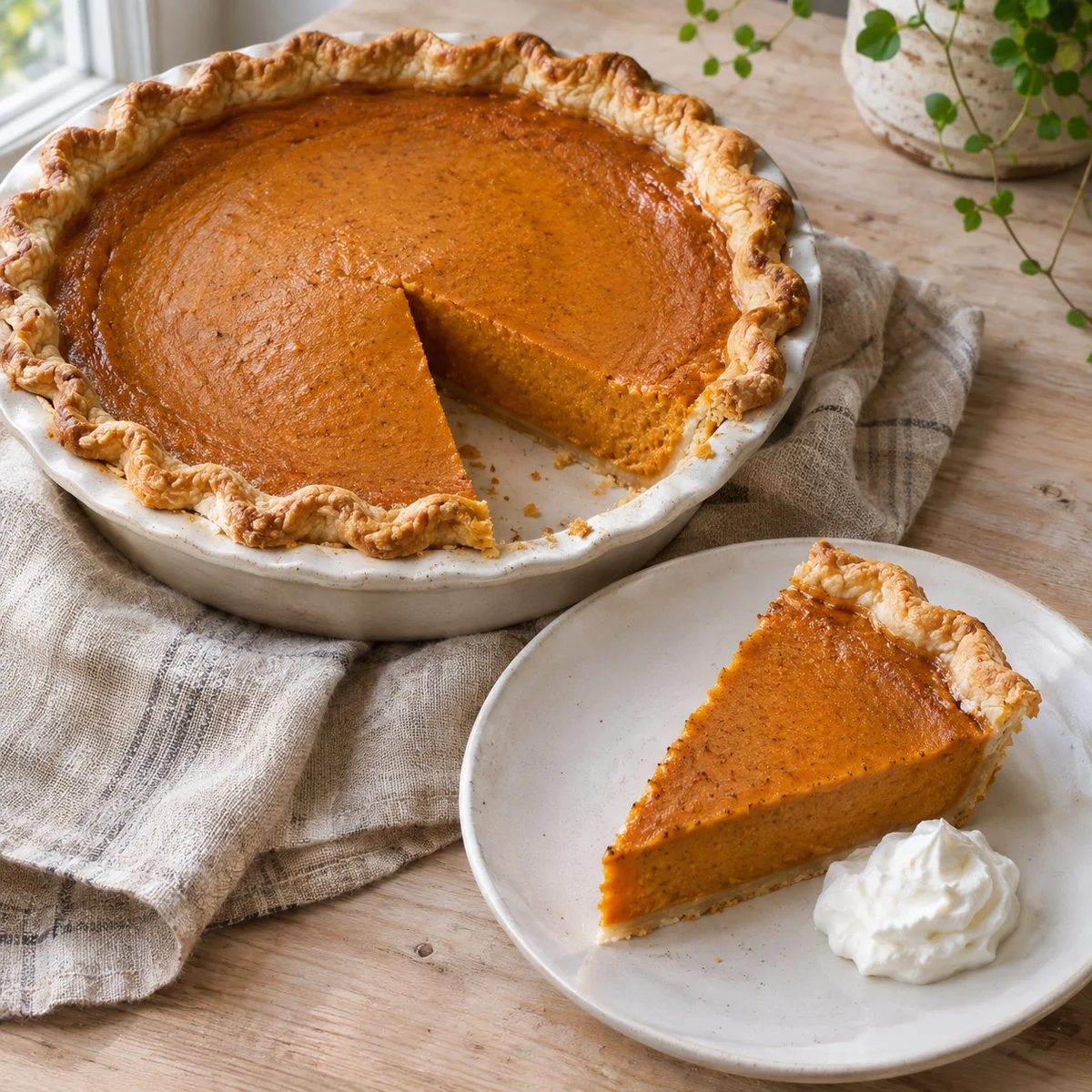
A classic pumpkin pie with a gently spiced filling
Classic pumpkin pie pairs a smooth orange custard with a flaky pastry shell. Cinnamon, ginger, nutmeg, and a small amount of cloves give the filling a warm flavor without covering up the pumpkin. This version starts with plain canned pumpkin and a prepared pie crust, making it approachable when several holiday dishes need attention.
The recipe includes partially blind-baking the pastry before adding the filling. That extra step helps the bottom begin cooking before the wet custard goes in. The biggest planning point comes afterward: allow time for the baked pie to cool and chill before slicing. A pie that is still warm will not serve as neatly as one whose filling has fully set.
Ingredients and choosing the right pumpkin
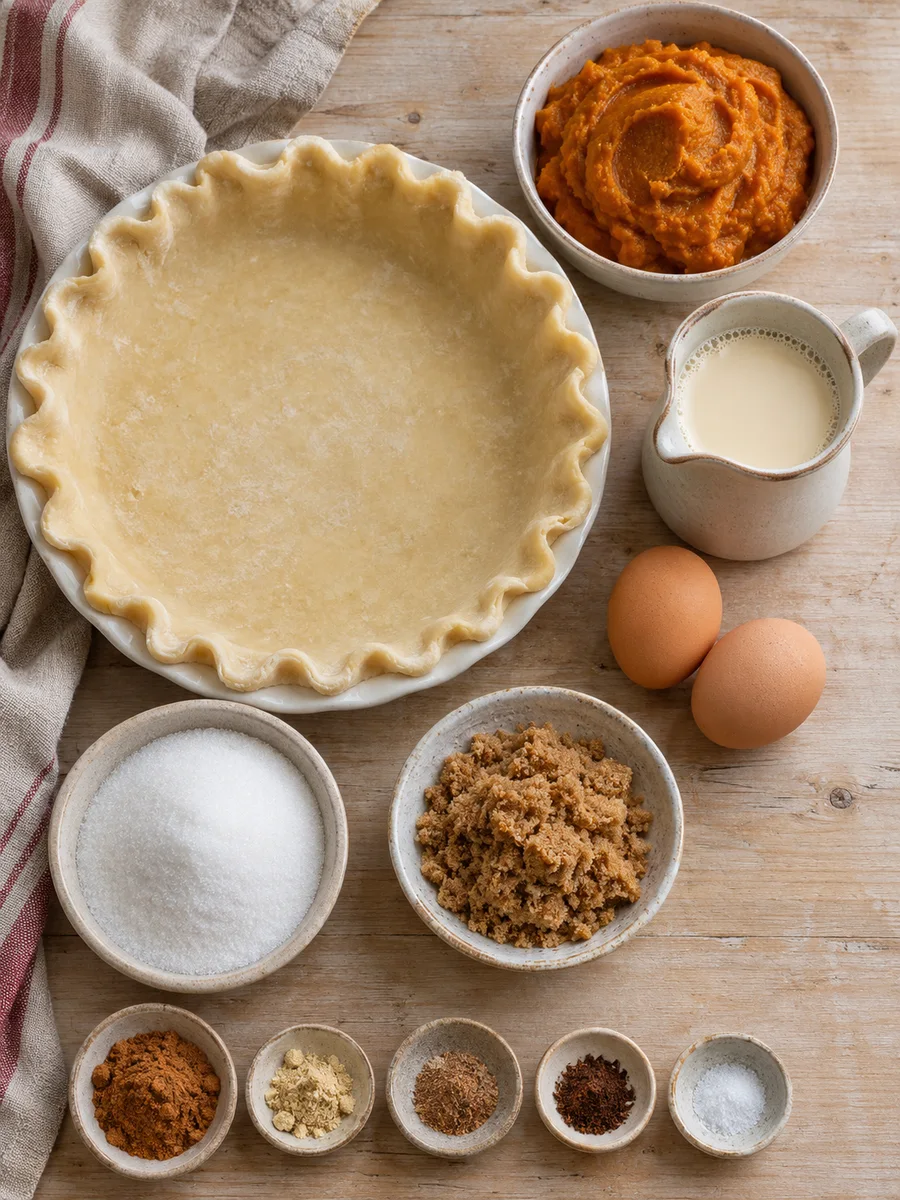
Use one fifteen-ounce can of plain pumpkin puree. The label should identify pumpkin rather than pumpkin pie filling or pumpkin pie mix. Those prepared fillings can already contain sweeteners and spices, so using one here would change the balance.
The pastry should fit a deep nine-inch pie plate, approximately one and a half inches deep. A refrigerated all-butter crust is convenient, or use your usual homemade single-crust pastry. Preparation of homemade dough is separate from the time listed here. Follow packaged pastry instructions if they differ for handling or blind-baking.
Evaporated milk adds richness without the sweetness of condensed milk. They are different products: sweetened condensed milk is not a measure-for-measure replacement. Shake the evaporated milk can before opening and measure one cup rather than adding a whole larger can automatically.
Two eggs help the filling set. White and light brown sugar provide sweetness with a little molasses flavor. Measure the ground spices carefully, especially cloves, which can dominate when too much is added. Salt balances the sweetness; it should not make the finished filling taste salty.
Prepare a flaky crust without stretching
Fit the pastry gently into the plate and ease it down into the corners. Stretching the dough to reach the rim encourages it to shrink in the oven. Fold the edge and crimp it with your fingers or a fork, then keep the shell chilled while the oven heats.
Check the pie plate manufacturer's instructions about moving a chilled dish into a hot oven. Some materials do not tolerate sudden temperature changes. Place the pie plate on a rimmed baking sheet to make carrying the filled shell steadier and catch any small spills.
Line the pastry with parchment and add enough pie weights or dried beans to support the base and sides. Bake for fifteen minutes, then remove the weights carefully and bake five minutes longer. The base should look dry rather than greasy and raw. It does not need to be deeply browned because it will bake again with the filling.
Mix a smooth pumpkin custard
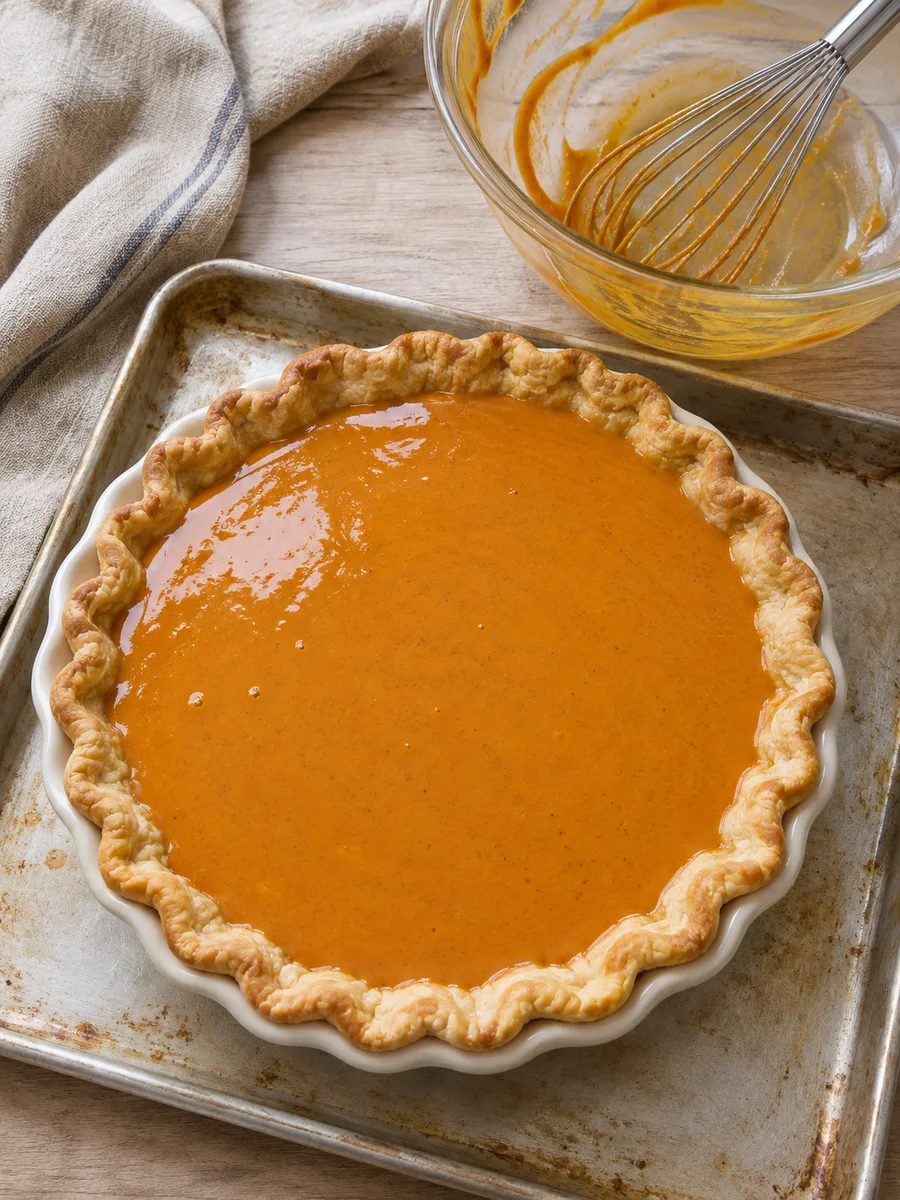
Whisk the pumpkin, sugars, spices, and salt together first. This distributes the spices before the eggs and milk loosen the mixture. Add the eggs and whisk until incorporated, then gradually stir in the evaporated milk.
Mix steadily rather than beating at high speed. A lot of air can leave bubbles across the surface and make the custard look less smooth. Scrape the bowl so the heavier pumpkin at the bottom is fully blended with the milk.
Pour into the warm partially baked shell, leaving a little space below the top. If your shell is smaller than specified, stop before it overflows. Bake extra filling separately in an oven-safe ramekin rather than trying to fit every drop into an undersized pie.
Bake until the center is gently set
Reduce the oven to 350°F (175°C) before baking the filled pie. Begin checking after about forty-five minutes. The outer filling should be set, while the middle should move with a gentle unified wobble when the dish is nudged. It should not ripple like liquid.
A food thermometer provides another useful check because the custard contains eggs. The center should reach at least 160°F (71°C). Avoid relying only on the pastry color: the rim may be ready before the filling, especially in an oven with strong top heat.
Cover the pastry edge loosely with foil if it darkens early. Continue baking until the center is ready, then remove the pie rather than waiting for the entire surface to look completely rigid. Excess baking can make the texture grainier and encourage cracks as the custard cools.
Cool, refrigerate, and slice
Set the pie on a rack for about sixty to ninety minutes so the strongest heat can escape. Refrigerate promptly and always within two hours of baking, or within one hour if the surroundings are above 90°F (32°C). Do not leave an egg-and-milk pie on the counter overnight.
Allow about four hours total cooling and chilling, including the rack time. Loosely cover it during initial chilling, then cover once cold. The center should be thoroughly chilled and set before you cut it.
Use a clean sharp knife, wiping between slices. Add whipped cream to individual servings rather than covering the entire pie ahead of time. This keeps the pastry and filling visible and makes leftover storage simpler.
Common questions and make-ahead advice
Why is my pie cracked?
It may have baked too long or cooled unevenly. Watch the center rather than waiting for a completely firm surface in the oven. A small crack does not by itself mean the pie is unsafe; check the cooking and storage steps.
Can I make it the day before?
Yes. Bake, cool, and refrigerate it as directed, then keep it chilled until serving. One day ahead is convenient because the filling has plenty of time to set. Count that day as part of the total refrigerated storage time.
Why is the bottom soft?
A wet filling, insufficiently baked pastry, or a shallow shell can contribute. Partially blind-bake as directed and avoid adding extra milk. The finished bottom should be cooked, although a custard pie base will not stay as crisp as an empty pastry shell.
Can I use homemade pumpkin puree?
Homemade puree varies in water content. This recipe is written for canned puree, so a watery homemade version is not a dependable direct substitute without draining and adjusting it.
Storing the finished pie
Keep the pie at 40°F (4°C) or below and use within three to four days total. Return uneaten slices to the refrigerator promptly after serving. These instructions apply to this homemade custard pie, regardless of whether some commercially packaged pies carry different storage instructions.
More recipes to try
Keep these ideas for another meal or something to serve alongside.
FROM THE SEASONBITE KITCHEN
Classic Pumpkin Pie with a Flaky Crust
A smooth pumpkin custard pie with warm spices and a flaky pastry crust. Includes blind-baking instructions, clear doneness cues, and a cooling plan for neat slices.
- PREP
- 20 minutes
- COOK
- 1 hour 15 minutes
- REST / WAIT
- 4 hours
- TOTAL
- 5 hours 35 minutes
- YIELD
- 8 slices
Ingredients
Tap an ingredient as you go.
Instructions
Prepare the pastry
Heat a conventional oven to 400°F (200°C). Fit pastry into a 9-inch deep-dish pie plate, about 1 1/2 inches deep, without stretching it. Fold and crimp the edge. Keep chilled while the oven heats. Follow the crust and pie dish manufacturers’ instructions if using a packaged crust or a dish sensitive to temperature changes.
Partially blind-bake
Line the pastry with parchment and fill with pie weights or dried beans, supporting the sides. Set on a rimmed baking sheet and bake for 15 minutes. Carefully lift out the parchment and weights, then bake for 5 more minutes until the base looks dry and the rim is pale golden. Reduce oven to 350°F (175°C). Leave the pie plate on its baking sheet.
Mix the pumpkin filling
Whisk pumpkin puree, both sugars, cinnamon, ginger, nutmeg, cloves, and salt until smooth. Whisk in eggs, then gradually add evaporated milk. Mix just until evenly combined without whipping in lots of air. Do not taste the uncooked egg mixture.
Fill and bake
Pour filling into the warm partially baked shell, leaving about 1/4 inch below the top; do not overfill a smaller shell. Bake at 350°F (175°C) for 45–55 minutes, until the edges are set, the center has a gentle unified wobble rather than a liquid ripple, and a food thermometer in the center reads at least 160°F (71°C). Shield the pastry edge with foil if it darkens too quickly. Timing varies; continue until the center is ready.
Cool and chill
Cool on a rack for about 60–90 minutes, then refrigerate promptly, always within 2 hours of baking or within 1 hour above 90°F (32°C). Allow approximately 4 hours total cooling and chilling, including the initial rack time, until thoroughly chilled and set. Loosely cover during initial chilling, then cover once cold. Slice with a clean knife and add whipped cream only when serving.
Dessert · American
Kitchen notes
- The approximately 5-hour-35-minute total includes 4 hours cooling and chilling. Oven preheating and optional homemade pastry preparation are additional if not completed during the listed preparation time.
- Use a deep 9-inch shell. If your shell is smaller, do not overfill; bake excess custard separately in an oven-safe ramekin until its center reaches 160°F (71°C).
- Use plain pumpkin puree and evaporated milk. Pumpkin pie filling and sweetened condensed milk are different products and are not direct substitutions.
- Make up to 1 day ahead. Refrigerate at 40°F (4°C) or below and use within 3–4 days total. Keep chilled except for brief serving periods.
- Contains eggs, milk, and usually wheat. Check the pastry and whipped cream labels.
Allergens: Check every ingredient label and choose ingredients suitable for your dietary needs.
Find this recipe at https://seasonbite.com/classic-pumpkin-pie-flaky-crust/