DINNER
Garlic Herb Salmon Foil Packs
Bone-in salmon steaks and asparagus bake together in foil with a creamy garlic, lemon, and herb sauce.
Published · Updated
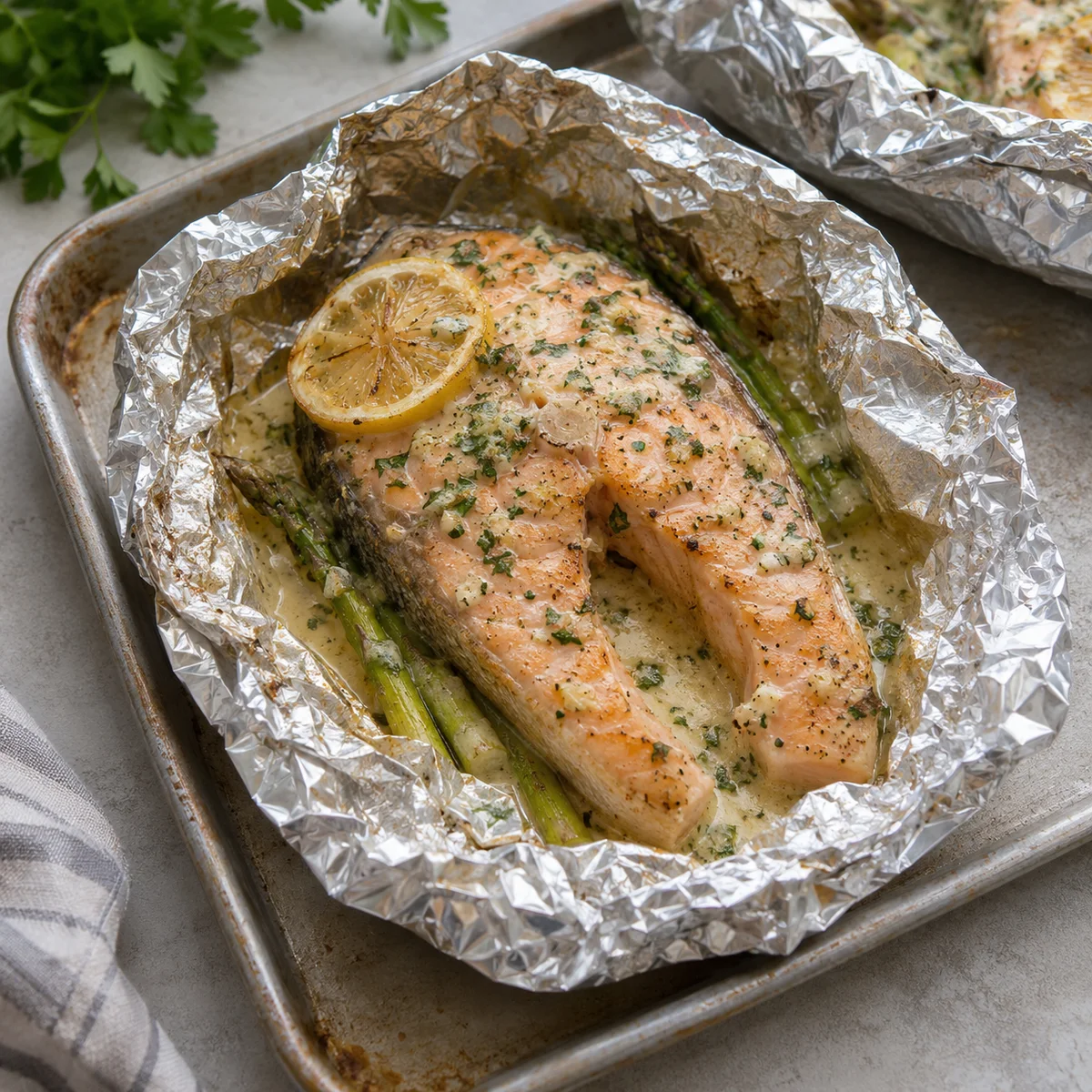
Creamy salmon steaks baked in individual packets
Garlic herb salmon foil packs combine bone-in salmon steaks, slender asparagus, and a small amount of garlic cream sauce in individual oven packets. The foil holds the juices around the fish while the asparagus cooks underneath. Lemon, parsley, and Parmesan give the sauce flavor without requiring a separate saucepan.
This version uses cross-cut salmon steaks, not long rectangular fillets. Their central bone and thickness affect how you check doneness. Choose pieces of similar size so they cook at roughly the same pace, and use a thermometer rather than relying only on a timer.
Ingredients and choosing the salmon
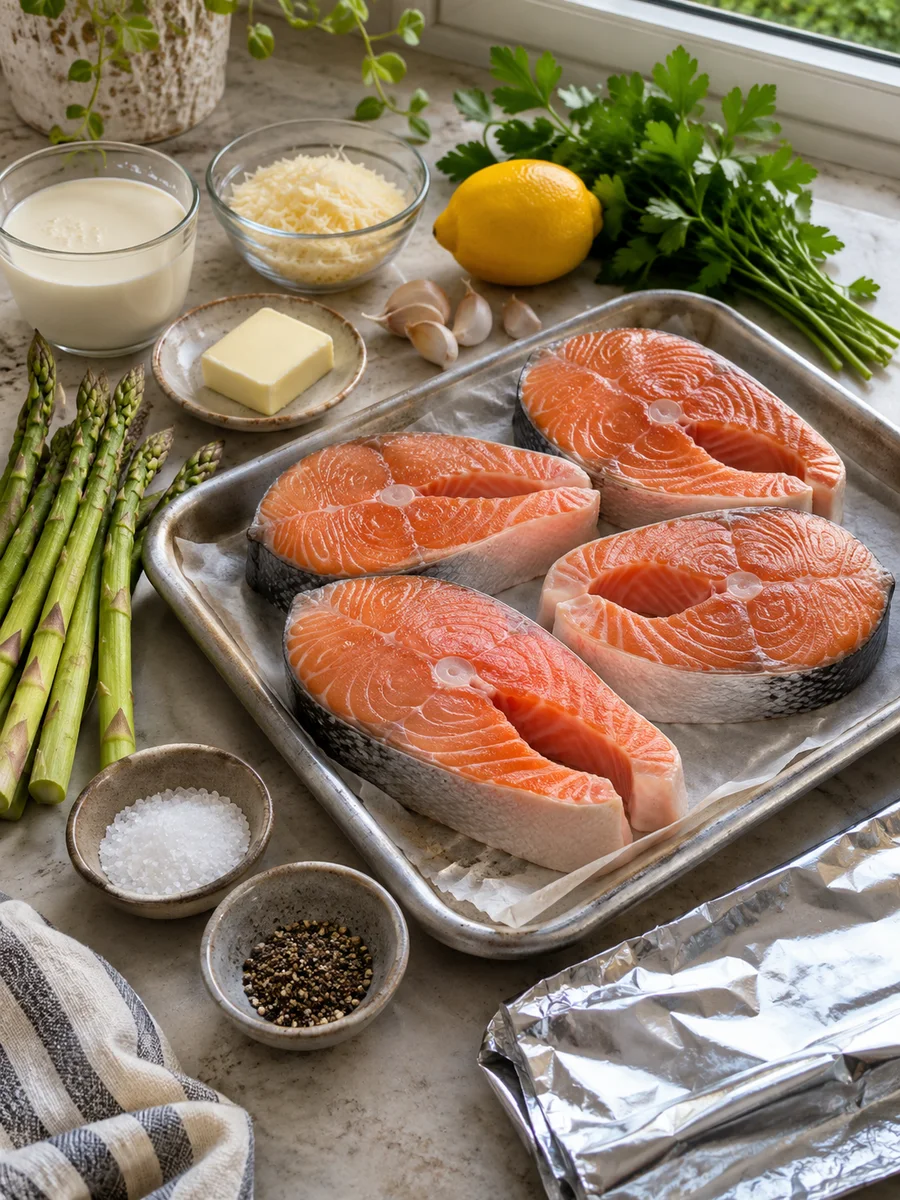
Look for four salmon steaks about one inch thick and eight ounces each. Thaw frozen steaks in the refrigerator before cooking, following the package instructions. Pat them dry so extra surface water does not dilute the sauce.
Slender asparagus is a good match for the short packet bake. Trim the woody ends and divide it into four equal bundles. If the spears are thick, split them lengthwise. Dense vegetables such as raw potato chunks will not cook in the same time and should be prepared separately.
Use heavy cream for the sauce. Low-fat milk behaves differently when heated with lemon and may separate more noticeably. Fresh garlic should be finely minced so it distributes throughout the small amount of sauce. Finely grated Parmesan melts more evenly than large shavings.
The lemon zest adds citrus aroma while the measured juice supplies acidity. Keep to the stated amount rather than pouring extra juice into the packets. Add the single thin lemon slice on each steak before sealing.
Build and seal the foil packets
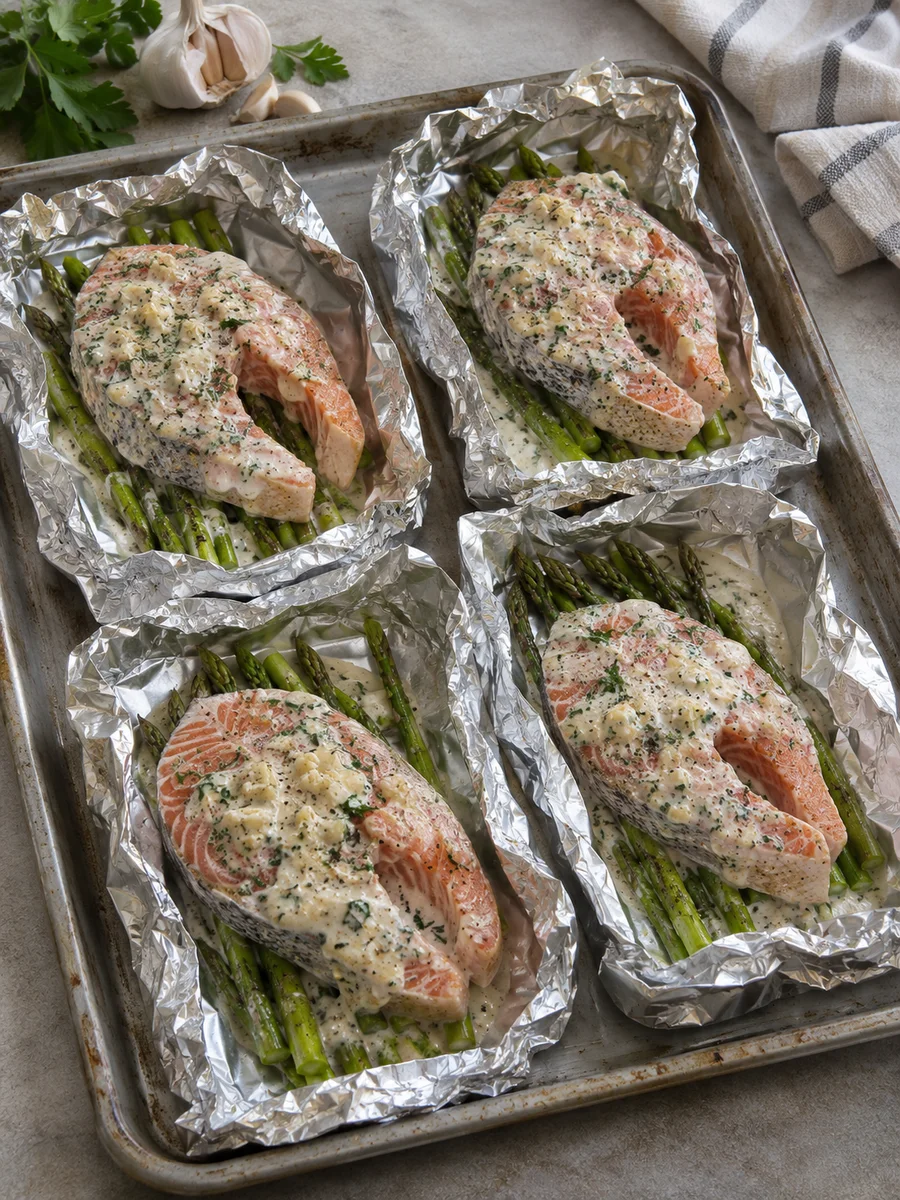
Use heavy-duty foil, or double ordinary thin foil. Arrange the sheets on a rimmed tray before adding the fish so the filled packets do not need to be carried across the kitchen individually. Turn the edges up slightly to make shallow boats.
Place asparagus on each sheet and rest a salmon steak on top. Whisk the sauce ingredients together and divide the mixture equally among the four portions. The sauce is intended to coat the fish and collect around the vegetables, not completely submerge them.
Bring the long sides together above the steak and fold them tightly several times. Fold the short ends inward to close the packet. Leave a small air space above the fish for steam, and keep the folds facing upward. A loose fold near the base can let cream run onto the tray.
Bake and check each steak
Bake at 400°F (200°C) for approximately twenty to twenty-five minutes. Open a packet carefully because trapped steam escapes quickly. Insert a thermometer into the thickest flesh, avoiding contact with the central bone, and check for 145°F (63°C).
Check the remaining steaks too. Similar-looking pieces can heat at different rates, especially if one is thicker or was colder when assembled. Reseal any portion that needs more time and return it to the oven. The flesh should be opaque and separate easily, but temperature is the more dependable check.
The packet keeps the fish moist but does not produce a crisp browned top. The asparagus will be tender rather than roasted and charred. Serve straight from the opened packet on a plate, spooning the sauce over the food.
Serving and preparing ahead
Offer rice, bread, or boiled potatoes alongside to catch the sauce. Keep those accompaniments separate from the packet so their cooking time does not interfere with the fish. Explain that salmon steaks contain bones and provide a small side plate for them if useful.
You can trim the asparagus and measure the sauce ingredients earlier in the day. Keep the salmon refrigerated and assemble close to baking. Do not leave raw fish on the counter while waiting for other dishes to finish.
Remove leftovers from the foil before refrigerating. Store promptly in shallow covered containers and use within three days for best quality, respecting any earlier ingredient storage limit. Reheat in a suitable dish until the center reaches 165°F (74°C).
Common questions
Why is there a little oil on the sauce?
Butter and salmon release fat during baking. Gently stir the collected sauce before spooning it over the fish. A few droplets do not necessarily mean the cream has curdled.
Can I use fillets instead?
You can use a similar weight of salmon fillet, but the shape and thickness change the baking time. Start checking early and use the same 145°F (63°C) endpoint rather than assuming the steak timing applies.
Can I cook the packets on a grill?
This recipe gives oven instructions. Direct grill heat and flare-ups affect foil packets differently, so the stated time is for a conventional oven on a rimmed tray.
More recipes to try
Keep these ideas for another meal or something to serve alongside.
FROM THE SEASONBITE KITCHEN
Garlic Herb Salmon Foil Packs
Bone-in salmon steaks and asparagus bake together in foil with a creamy garlic, lemon, and herb sauce.
- PREP
- 20 minutes
- COOK
- 25 minutes
- TOTAL
- 45 minutes
- YIELD
- 4 servings
Ingredients
Tap an ingredient as you go.
Instructions
Prepare the foil and vegetables
Heat a conventional oven to 400°F (200°C). Cut 4 large sheets of heavy-duty foil, about 18 by 12 inches (45 by 30 cm), and place on a rimmed baking tray. If using thin foil, double the layers. Divide the slender asparagus among the sheets.
Mix the garlic cream
Whisk heavy cream, melted butter, Parmesan, garlic, parsley, lemon zest, lemon juice, salt, and pepper together. Pat the salmon steaks dry and place one on each asparagus portion.
Seal the packets
Turn up the foil edges around the fish, then divide the cream mixture evenly among the packets and add one lemon slice to each. Bring the long sides together above the fish and fold tightly several times. Fold both ends inward to seal, leaving a little space above the fish for steam. Keep packets upright on the tray.
Bake and check the fish
Bake for about 20–25 minutes. Open one packet carefully, directing steam away from your face, and check the thickest part of the fish away from the bone. It should reach 145°F (63°C) and separate easily with a fork. Check each steak; thicker or colder pieces may need longer. Reseal and return undercooked portions to the oven.
Serve carefully
Transfer each packet to a plate and open carefully. Spoon the sauce over the salmon and asparagus and add the reserved parsley. Warn diners that the steaks contain a central bone and may have smaller bones; remove them as you eat.
Main course · American
Kitchen notes
- Use salmon steaks about 1 inch thick. A thick fillet or much thicker steak needs different timing; check the center temperature in each portion.
- Slender asparagus cooks with the fish. Thick spears should be split lengthwise before packing; potatoes are not a direct substitute at this baking time.
- Heavy cream is less likely to split than low-fat milk. Small fat droplets in the cooked sauce are normal; stir the sauce gently before spooning it over the fish.
- Never put these foil packets in a microwave. Refrigerate leftovers without the foil and transfer to an appropriate dish for reheating.
- Contains fish and milk.
- Refrigerate leftovers in shallow covered containers within 2 hours, or 1 hour above 90°F (32°C). Keep at 40°F (4°C) or below and use within 3–4 days unless a shorter limit is stated. Reheat hot dishes to 165°F (74°C).
Allergens: Check every ingredient label and choose ingredients suitable for your dietary needs.
Find this recipe at https://seasonbite.com/garlic-herb-salmon-foil-packs/