SIDE DISHES
Roasted Brussels Sprouts with Balsamic Glaze
Crisp-edged Brussels sprouts roasted cut-side down and finished with a simple balsamic-honey glaze. Includes pan-spacing advice, timing cues, and a vegan option.
Published
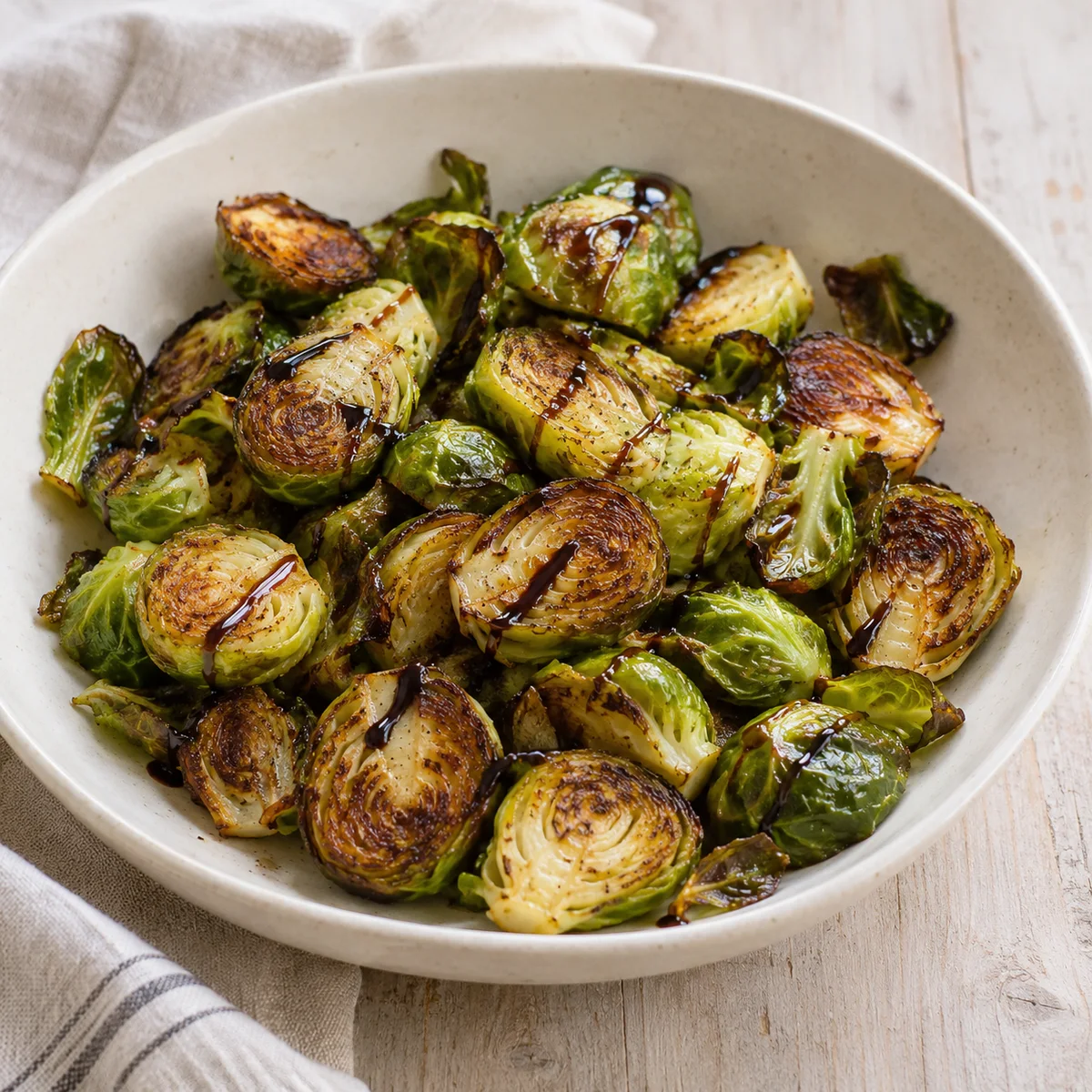
Crisp roasted Brussels sprouts with a simple glaze
Roasted Brussels sprouts with balsamic glaze combine deeply browned cut faces, tender green centers, and a little sweet-tart finish. The vegetables roast with olive oil, salt, and pepper while balsamic vinegar and honey reduce in a small saucepan. Keeping those jobs separate helps the sprouts brown without burning the glaze.
This recipe serves six as a side and takes about forty-five minutes overall. It uses two baking sheets for two pounds of sprouts, leaving enough space for hot air to reach the pieces. That space matters more than adding extra oil or cooking at an unusually high temperature.
Ingredients and choosing fresh sprouts
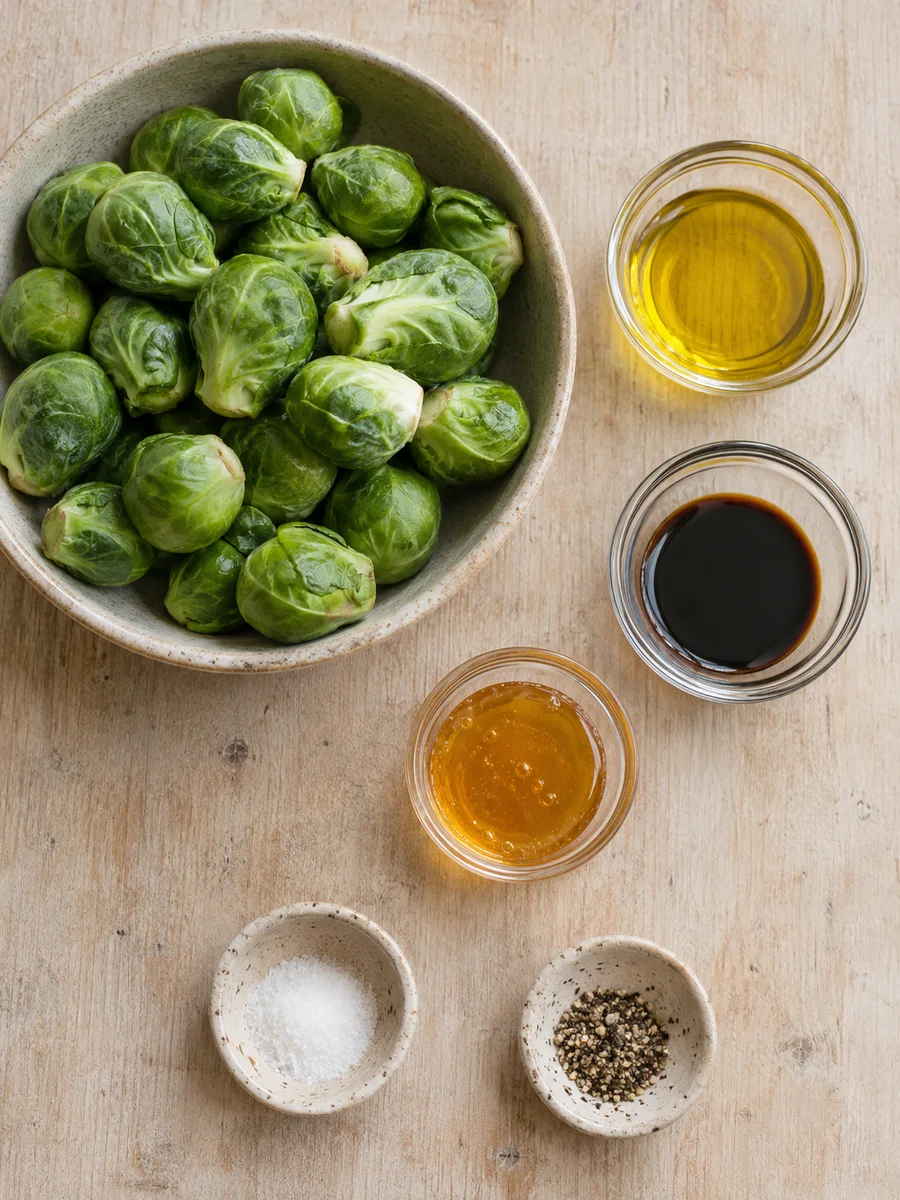
Choose firm Brussels sprouts with tightly layered leaves. Small and medium sprouts often cook more evenly when halved; very large ones can be quartered. A mixture of sizes is workable, but cut larger pieces down so the centers finish at about the same time.
Remove yellowed or damaged outer leaves and trim the dry end of each stem. Keep enough stem attached to hold the leaves together when you cut through the middle. Trimming too deeply can make each half fall apart before it reaches the pan.
Olive oil helps the cut faces brown and carries the salt and pepper over the leaves. Balsamic vinegar supplies the tangy part of the finish. Choose an ordinary pourable vinegar for reducing, not an already thick bottled balsamic glaze; the latter can become sticky or burn if reduced again.
Honey rounds out the acidity. Maple syrup can replace it in the same amount for a vegan variation. There are no nuts, bacon, or cheese in the base recipe, making it easy to serve beside several different main dishes.
Dry and cut before seasoning
Rinse the sprouts, then dry them thoroughly with a clean towel. Water left between the leaves creates steam on the pan and delays browning. If washing them ahead, let them dry before placing them in a covered container in the refrigerator.
Cut lengthwise through the stem so most halves remain intact. Quarter very large sprouts. Keep tiny loose leaves separate instead of coating them and leaving them on the pan for the full roast; they cook much faster than the centers and can become bitter if blackened.
Heat the oven fully before the trays go in. This recipe uses a conventional 425°F (220°C) setting. If your oven runs hot, check earlier rather than waiting for the end of the estimated time. A deeply golden surface is the goal, not a black crust.
Space the sprouts and roast cut-side down
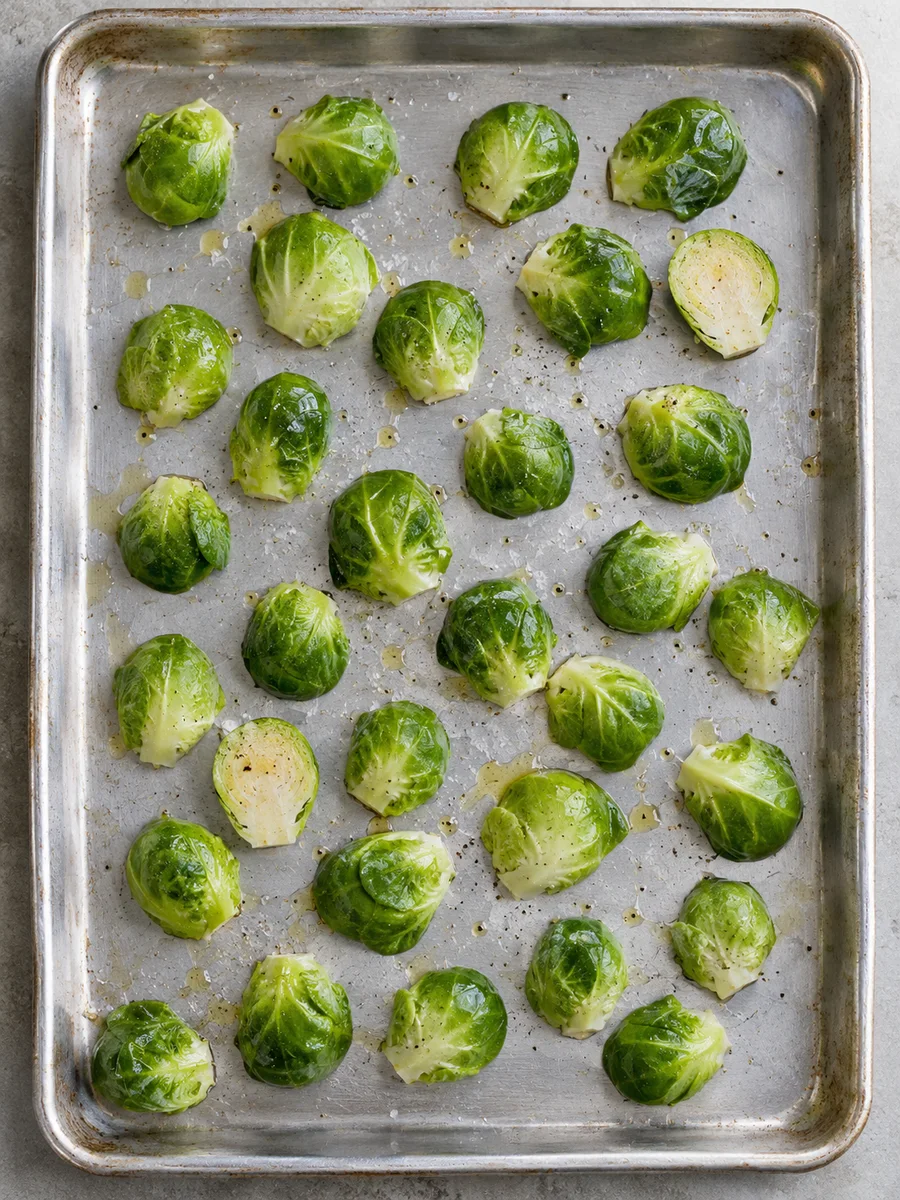
Toss the dry sprouts with the measured oil, salt, and pepper in a large bowl. Divide them between two bare metal rimmed sheets. Most halves should sit cut-side down, making direct contact with the hot pan. Leave visible gaps rather than making a tightly packed carpet of vegetables.
Roast for about twenty-five to thirty minutes. Rotate the trays and switch their rack positions halfway through if one level browns faster. Begin checking smaller pieces after twenty minutes. The centers should be easy to pierce with a fork and the flat faces should have a rich golden color.
Add reserved small leaves for the last eight to ten minutes. Remove pieces that are ready before the rest rather than leaving them to burn. Oven behavior and sprout size vary, so a color-and-tenderness check is more dependable than a single fixed minute.
Make the balsamic glaze separately
Combine the balsamic vinegar and honey in a small saucepan while the vegetables roast. Simmer gently for four to six minutes, stirring occasionally, until reduced to roughly two to three tablespoons. It should lightly coat a spoon while still flowing.
Take the pan off the heat before the glaze turns into a thick sticky syrup. It becomes thicker as it cools. If it gets too firm, stir in a teaspoon of water and warm gently. A small saucepan gives better control than a very wide pan, where this small quantity can reduce rapidly.
Do not toss raw sprouts in the glaze before the high-heat roast. The sugar can scorch while the centers are still firm. Adding it afterward preserves both its flavor and the difference between crisp roasted edges and the soft interior.
Finish and serve promptly
Transfer the hot sprouts to a shallow bowl and drizzle with about half the glaze. Toss gently and taste before adding the rest. Balsamic vinegars differ in sweetness and acidity, so a lighter first drizzle gives you more control than pouring everything on at once.
Serve soon after finishing. Holding the vegetables in a covered bowl traps steam and softens the edges. For a holiday table, have your serving dish ready so the sprouts can move from pan to table without a long wait.
Make-ahead advice and common questions
Can I prepare them the day before?
Trim, cut, and dry the sprouts up to one day ahead, then refrigerate covered. Make the glaze separately and keep it refrigerated too. Roast near serving time and warm the glaze gently just enough to loosen it.
Why are my sprouts soft instead of crisp?
They may have been crowded, wet, or covered after cooking. Use the full two-pan space, dry them well, and serve promptly. More glaze will not correct steamed vegetables; it adds additional moisture to the surface.
Why are the leaves dark but the middle firm?
The pieces may be too large or the oven may run hot. Cut large sprouts smaller and keep loose leaves for the final part of the roast. Check tenderness with a fork before calling the dish finished.
Can I use frozen Brussels sprouts?
Frozen sprouts release more moisture and need a different approach to get a browned surface. This recipe is written for fresh sprouts, so use them for the most predictable result rather than substituting frozen ones without adjusting the method.
Leftovers and meal ideas
Serve with roast chicken or turkey, stuffing, or a corn casserole. Their savory roasted flavor also works beside a simple bean dish. Six portions are intended as side servings, with the rest of the meal supplying the main protein and other accompaniments.
Refrigerate leftovers within two hours, or one hour above 90°F (32°C), and keep at 40°F (4°C) or below for three to four days. Reheat to 165°F (74°C) throughout. An uncovered oven reheat can improve the surface, but leftover sprouts will usually be softer than a freshly roasted batch.
More recipes to try
Keep these ideas for another meal or something to serve alongside.
FROM THE SEASONBITE KITCHEN
Roasted Brussels Sprouts with Balsamic Glaze
Crisp-edged Brussels sprouts roasted cut-side down and finished with a simple balsamic-honey glaze. Includes pan-spacing advice, timing cues, and a vegan option.
- PREP
- 15 minutes
- COOK
- 30 minutes
- TOTAL
- 45 minutes
- YIELD
- 6 side-dish servings
Ingredients
Tap an ingredient as you go.
Instructions
Heat the oven and trim the sprouts
Heat a conventional oven to 425°F (220°C). Set out two large rimmed baking sheets. Rinse Brussels sprouts, dry thoroughly, trim only the dry stem ends, and remove damaged outer leaves. Halve lengthwise through the stem; quarter exceptionally large sprouts so pieces are similar in size.
Season and space
Toss sprouts with olive oil, salt, and pepper. Divide between the two bare metal baking sheets in a single layer with space between pieces. Set most halves cut-side down. Keep very small loose leaves aside to add for the final 8–10 minutes so they do not burn.
Roast until tender and browned
Roast for 25–30 minutes, rotating the pans and swapping their rack positions halfway through. Start checking smaller pieces at 20 minutes. The cut faces should be deeply golden and the centers easily pierced with a fork. Add reserved small leaves for the final 8–10 minutes. Remove finished pieces early if necessary.
Reduce the glaze
While sprouts roast, combine balsamic vinegar and honey in a small saucepan. Simmer gently for 4–6 minutes, stirring occasionally, until reduced to roughly 2–3 tablespoons and lightly coating a spoon. Remove from heat before it becomes stiff; it thickens as it cools. Loosen with a teaspoon of water if needed.
Finish just before serving
Transfer roasted sprouts to a serving bowl. Drizzle with about half the glaze, toss gently, and add more to taste. Serve promptly for the best crisp edges.
Side dish · American
Kitchen notes
- Use two pans for 2 pounds of sprouts. Crowding them on one pan traps steam and reduces browning. Timings vary with size and oven; check tenderness as well as color.
- Do not add the sugary glaze before roasting at high heat; it can scorch before the sprouts are tender.
- For a vegan version, replace honey with the same amount of maple syrup. This base recipe has no nuts, bacon, or cheese.
- Make ahead by trimming and drying sprouts up to 1 day ahead and refrigerating covered. Keep glaze refrigerated separately and warm gently to loosen. Roast close to serving time for better texture.
- Refrigerate leftovers within 2 hours, or 1 hour above 90°F (32°C), and store at 40°F (4°C) or below for 3–4 days. Reheat to 165°F (74°C); edges will be softer than when freshly roasted.
Allergens: Check every ingredient label and choose ingredients suitable for your dietary needs.
Find this recipe at https://seasonbite.com/roasted-brussels-sprouts-balsamic-glaze/